To turn off Low Data Mode on an iPhone 11, open Settings > Cellular > Cellular Data Options and turn off Low Data Mode for cellular data, or open Settings > Wi-Fi, tap the (i) next to your network, and turn it off for that network. Low Data Mode pauses automatic app updates, iCloud Photos syncing, and background app refresh, and it can lower streaming quality, which can make notifications late, photos stop syncing, and video look blurry.
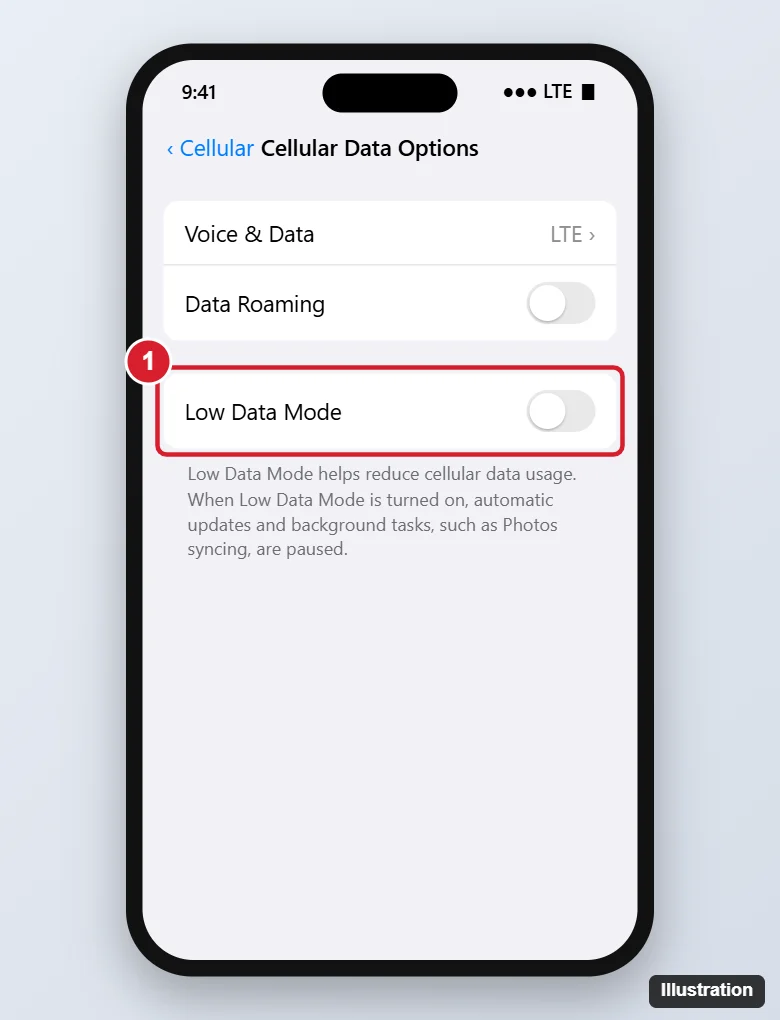
Turn Off Low Data Mode for Cellular Data
- Open the Settings app.
- Tap Cellular (called Mobile Data in some regions).
- Tap Cellular Data Options.
- Turn off the Low Data Mode switch.
Using two lines (dual SIM or eSIM)? On the Cellular screen, tap the line you want under SIMs, then turn off Low Data Mode there. Each line has its own setting.
Why doesn’t my iPhone 11 show “Data Mode”?
Instructions for newer iPhones mention a Data Mode menu with options like Allow More Data on 5G, Standard, and Low Data Mode. That menu appears only on 5G models (iPhone 12 and later). The iPhone 11 is a 4G LTE phone, so it shows a simple on/off switch instead.
Turn Off Low Data Mode for Wi-Fi
Low Data Mode is saved per Wi-Fi network, so turning it off for one network doesn’t affect others.
- Open Settings > Wi-Fi.
- Tap the blue (i) next to the network you’re connected to.
- Turn off Low Data Mode.
Your iPhone may turn Low Data Mode on automatically for a Wi-Fi network if it looks like a personal hotspot, such as a phone’s hotspot or a travel router. Check these networks if things still seem slow.
How to Tell If Low Data Mode Is On
- Check the switches in Settings > Cellular > Cellular Data Options and in each Wi-Fi network's (i) page.
- Apps may show messages like “Low Data Mode is on” when trying to sync or stream.
- iCloud Photos shows “Syncing paused” or a Low Data Mode note at the bottom of the Library.
Low Data Mode vs. Low Power Mode
They’re different settings. Low Power Mode (Settings > Battery, or the battery icon in Control Center) saves battery by reducing background activity and screen brightness. The battery icon turns yellow when it’s on. It also pauses some background tasks, so if downloads or syncing seem stuck, check that Low Power Mode is off too.
What Changes When You Turn Low Data Mode Off
- Automatic app updates and downloads resume.
- iCloud Photos, iCloud Backup (on Wi-Fi), and other syncing resume.
- Background App Refresh works again.
- Streaming apps like Music, Podcasts, and FaceTime can use higher quality.
You’ll use more data, so keep an eye on usage on the Cellular screen under Cellular Data. Tap Reset Statistics at the bottom at the start of each billing cycle to track it accurately.
Save Data Without Low Data Mode
- Turn off cellular data for specific apps in Settings > Cellular (scroll to the app list).
- Turn off Wi-Fi Assist at the bottom of the Cellular screen so your phone doesn’t switch to cellular when Wi-Fi is weak.
- Turn off Settings > App Store > Automatic Downloads over cellular.
- Choose lower streaming quality inside video and music apps.
More Questions About Low Data Mode
Why did Low Data Mode turn on by itself?
Your iPhone can enable it automatically for hotspots, and some carrier plans or configuration profiles may enable it. It can also turn on for a new Wi-Fi network the phone thinks is metered.
Can’t find the Low Data Mode switch?
Make sure your iPhone runs iOS 13 or later (Settings > General > Software Update). Some carriers don’t show Cellular Data Options until a SIM or eSIM is active.
Does Low Data Mode make the internet slower?
It doesn’t lower your connection speed, but it reduces quality and pauses background tasks, which can make some things feel slower.

Kermit Matthews runs Live2Tech from just outside Philadelphia. He is an IT specialist with over 20 years of experience, from a university help desk to small-business IT, IT management and his own consulting practice, and has written tech guides full time since 2020. Steps are checked against the current software on a real device or the maker’s official documentation. More about Kermit.