Emoji and Bitmoji both add personality to your texts, and both can be used on an iPhone, but they’re very different things. Emoji are small standard icons built into every phone and computer. Bitmoji are cartoon stickers of you, made in a separate app from Snap Inc. And Apple has its own avatar option, Memoji, which adds to the confusion. This guide explains the differences, how to use each on an iPhone, and which one to pick.
Quick Answer
Emoji are standard characters (like 😂 and 👍) available on every iPhone through the emoji keyboard, and they look similar on any device. Bitmoji are personalized cartoon avatars of you that you create in the free Bitmoji app and send as stickers or images through the Bitmoji keyboard or Snapchat.
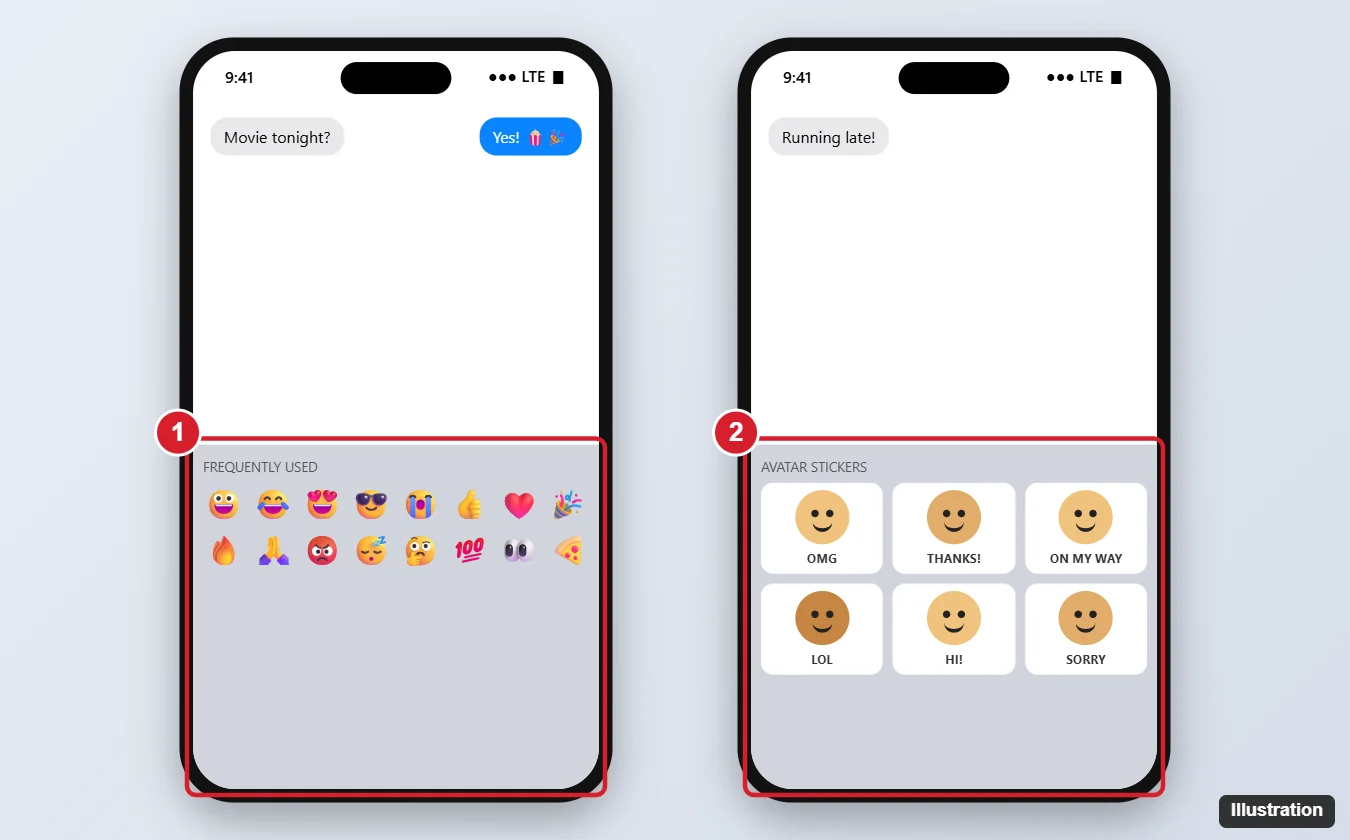
Emoji vs Bitmoji at a Glance
- What they are: emoji are text characters defined by the Unicode standard; Bitmoji are images (stickers) of a custom cartoon character.
- Personalization: emoji offer skin tone choices but look the same for everyone; Bitmoji look like you, with your hairstyle, face and outfit.
- Where they come from: emoji are built into iOS; Bitmoji require the Bitmoji app (and a Snapchat or Bitmoji account).
- How they’re sent: emoji are sent as text and can be mixed into sentences; Bitmoji are sent as pictures or stickers.
- Compatibility: emoji work in almost every app and on every phone, though the artwork differs slightly between Apple, Google, Samsung and others. Bitmoji appear as images, so they look the same everywhere but use more data.
How to Use Emoji on iPhone
- Tap in any text field to open the keyboard.
- Tap the smiley face key (or the globe key if you have several keyboards).
- Swipe through categories or search for an emoji, and tap one to insert it.
If you don’t see the emoji key, go to Settings > General > Keyboard > Keyboards > Add New Keyboard > Emoji. On iOS 18 and later, you can also create custom emoji-style images called Genmoji on supported iPhones with Apple Intelligence.
How to Use Bitmoji on iPhone
- Install Bitmoji from the App Store and sign in (you can use your Snapchat account).
- Create your avatar and save it.
- Go to Settings > General > Keyboard > Keyboards > Add New Keyboard and choose Bitmoji. Tap it and turn on Allow Full Access so it can insert images.
- In Messages or another app, tap the globe key to switch to the Bitmoji keyboard, tap a sticker to copy it, then paste it into the message.
Bitmoji are also built into Snapchat and appear as your avatar on Snap Map.
What About Memoji?
Memoji are Apple’s own customizable avatars, built into iOS (iPhone X and later for animated Memoji; sticker versions on more models). You create them in Messages by tapping the + button > Stickers > Memoji, and they appear as stickers in the emoji keyboard. Animated Memoji can copy your facial expressions using the front camera. Memoji don’t need a separate app or account, but they look best when sent to other Apple devices.
Which Should You Use?
- Quick reactions in any app: emoji.
- A cartoon version of yourself that works in Snapchat and on Android phones: Bitmoji.
- A personal avatar without another app, mostly for iMessage and FaceTime: Memoji.
Frequently Asked Questions
Are Bitmoji free?
Yes, the app and basic stickers are free. Some outfits and features may require purchases or a Snapchat+ subscription.
Can Android users see my Bitmoji?
Yes. Bitmoji are sent as images, so anyone can see them.
Why do my emoji look different on my friend’s phone?
Each company draws its own emoji artwork. The meaning is the same, but details vary. Very new emoji may appear as boxes on older phones.
Can I use Bitmoji in the emoji keyboard?
No. Bitmoji has its own keyboard. Memoji stickers are the ones that appear in the emoji keyboard.
Summary
- Emoji: built-in, standard characters for every app.
- Bitmoji: personalized cartoon stickers from the Bitmoji app.
- Memoji: Apple’s built-in avatars in Messages and the emoji keyboard.

Kermit Matthews is a freelance writer based in Philadelphia, Pennsylvania with more than a decade of experience writing technology guides. He has a Bachelor’s and Master’s degree in Computer Science and has spent much of his professional career in IT management.
He specializes in writing content about iPhones, Android devices, Microsoft Office, and many other popular applications and devices.