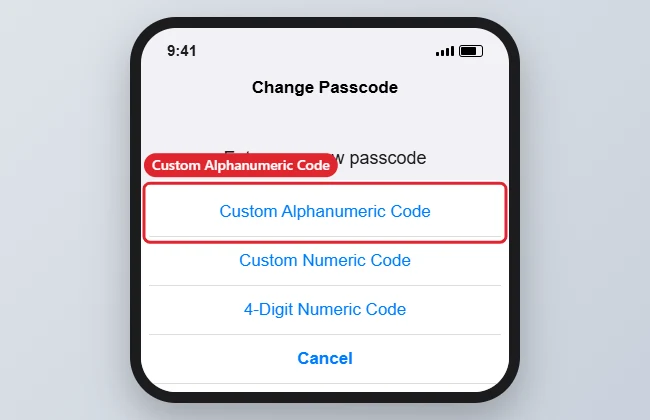
To use letters instead of numbers in your iPhone passcode, open Settings > Face ID & Passcode (or Touch ID & Passcode), tap Change Passcode, enter your current passcode, then tap Passcode Options and choose Custom Alphanumeric Code. Type a new passcode that uses letters, numbers, or both, and confirm it.
The same Passcode Options menu also lets you switch to a four-digit passcode if a short number suits you better.
Set an Alphanumeric Passcode
- Open Settings and tap Face ID & Passcode or Touch ID & Passcode.
- Enter your current passcode.
- Tap Change Passcode and enter the current passcode again.
- On the new passcode screen, tap Passcode Options.
- Choose Custom Alphanumeric Code.
- Type your new passcode, tap Next, then enter it again and tap Done.
Passcode Types Compared
| Type | Security | Convenience |
|---|---|---|
| 4-Digit Numeric Code | Lowest | Fastest to type |
| 6-digit code (default) | Good for most people | Quick |
| Custom Numeric Code | Better with more digits | Number pad stays |
| Custom Alphanumeric Code | Strongest | Full keyboard; slower to type |
With Face ID or Touch ID on, you’ll rarely type the passcode, so a longer alphanumeric code costs little day to day.
Can I switch back to a numeric passcode?
Yes. Change the passcode again and choose a numeric option in Passcode Options.
Does this change my Apple Account password?
No. The passcode only unlocks the device.
Picking a Passcode You Will Remember
- Use a phrase you can remember but others can’t guess, not your name or birthday.
- Your iPhone may also ask for the passcode after restarts and software updates, so make sure you remember it.
- If you use Stolen Device Protection, some changes need Face ID or Touch ID and a security delay when you’re away from familiar places.
If Passcode Options Is Missing or You Forget the Code
- Passcode Options is missing: A work or school profile may require a specific passcode type. Check Settings > General > VPN & Device Management.
- Worried about failed attempts? See the Erase Data setting.
- Forgot the new passcode: You’ll need to erase and restore the iPhone; after several failed attempts, iOS offers recovery options on the lock screen.
Related: Change your iPhone passcode.

Kermit Matthews runs Live2Tech from just outside Philadelphia. He is an IT specialist with over 20 years of experience, from a university help desk to small-business IT, IT management and his own consulting practice, and has written tech guides full time since 2020. Steps are checked against the current software on a real device or the maker’s official documentation. More about Kermit.