To turn off Location Services for every app, open Settings, tap Privacy & Security, tap Location Services, turn off Location Services, then confirm your choice. If you only want to limit one app, keep the main setting on and change that app’s permission instead.
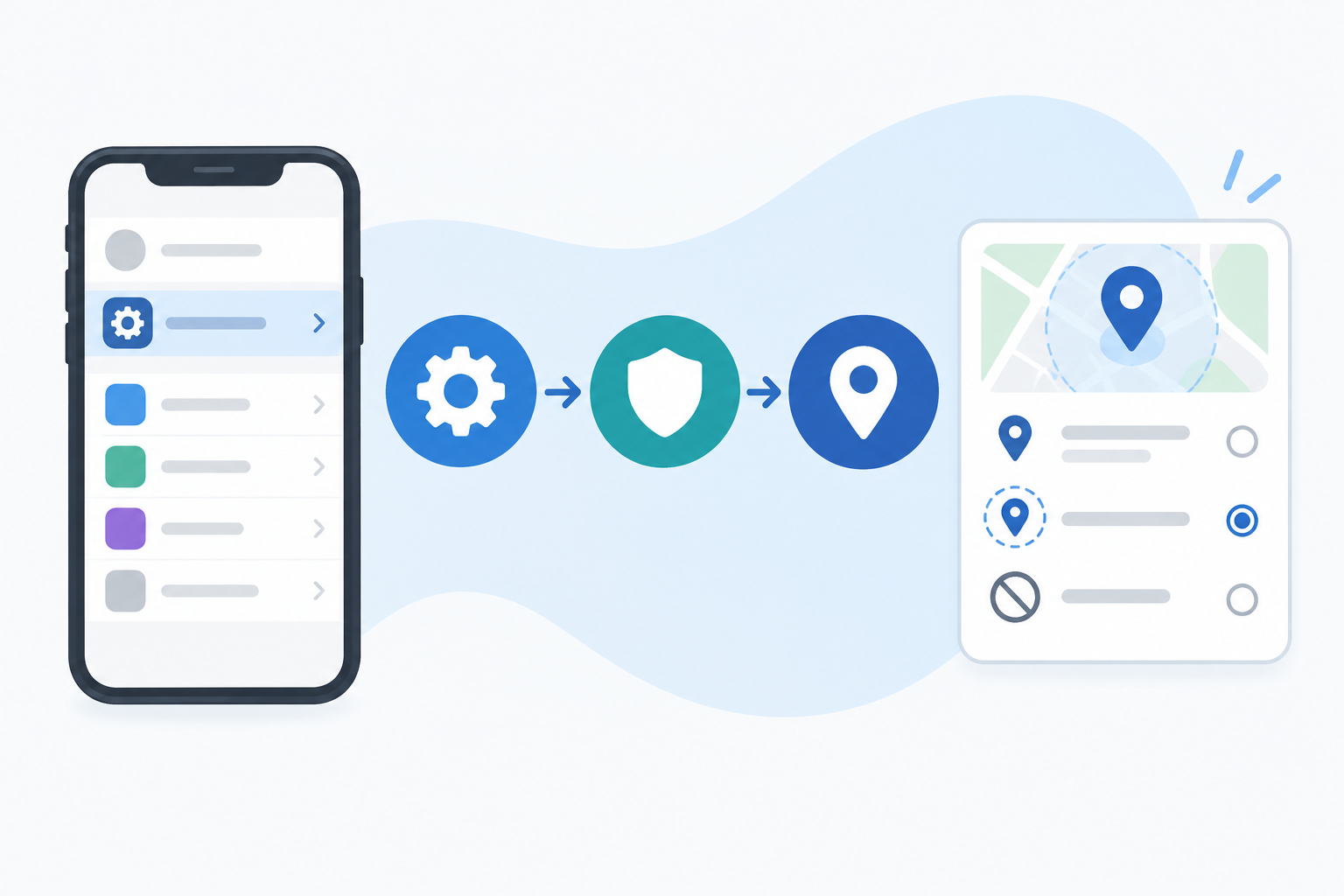
Location Services lets apps and iPhone features use your approximate or precise location when you allow it. Turning the main switch off is useful when you want to stop app access across the phone for a while, but it can also make features such as maps, weather, and location-based suggestions less useful. For a narrower change, use the per-app controls described below.
Turn off Location Services for every app
- Open Settings. Start from the Settings app on your iPhone.
- Tap Privacy & Security. Scroll to this section and open it.
- Tap Location Services. It is near the top of the Privacy & Security screen.
- Turn off Location Services. Tap the switch at the top, then confirm when your iPhone asks.
Your iPhone keeps this setting until you turn it back on. When it is off, apps and features that need Location Services may ask you to enable it again or may not work normally.
Limit location access for one app instead
You do not have to switch off Location Services everywhere to restrict a single app. This is usually the better choice when you still need location for navigation, weather, or other services.
- Go to Settings > Privacy & Security > Location Services.
- Leave the main Location Services switch on.
- Tap the app you want to change.
- Choose the permission that fits how you use it, such as Never or While Using the App.
The options shown can vary by app. Review this list occasionally, especially for apps that do not need your location to do their main job. For another model-specific walkthrough, see our guide to disabling location on iPhone 14.
Share approximate location instead of your precise location
Some apps work well with a general area rather than your exact position. In the same per-app screen, look for Precise Location and turn it off to share an approximate location with that app.
This lets you keep a location-based feature available without giving that particular app your most precise location. It is separate from the app’s main permission: first choose whether the app can access location, then decide whether it can use precise location.
What changes when you turn it off
The global switch applies broadly, so expect some services to lose helpful context. A maps app may not center directions on your current position. A weather app may not automatically show local conditions. Other apps may display a prompt asking for location access the next time you open a feature that needs it.
If the location-arrow icon is what prompted you to review these settings, our article on the iPhone status-bar icon for system services using location can help you identify why it appears.
Manage location sharing separately
Location Services permissions and sharing your location with people are related but different settings. If your goal is to stop sharing with a friend or family member, review Share My Location in the relevant Find My or Apple Account controls. Changing an app’s Location Services permission does not automatically answer every location-sharing situation.
For per-app settings, see where Location Services is on iPhone.
Related: How to Set a Default City in the iPhone Weather App.
Frequently asked questions
Can I turn off location for just one app?
Yes. Go to Settings > Privacy & Security > Location Services, tap the app, and choose an option such as Never. Keep the main Location Services switch on when you want other allowed apps to continue using location.
Is approximate location the same as turning it off?
No. Approximate location still lets an app use a broad area. Turning off the app’s permission prevents that app from using Location Services.
Why does my iPhone ask me to turn Location Services back on?
An app or feature may need location for the task you selected. You can decide whether to enable the main switch again, change that one app’s permission, or continue without the location-based feature.
Does turning off Location Services affect Maps?
It can. Maps and other navigation features may be unable to use your current position normally while Location Services is off. If you only want to restrict a different app, use that app’s individual permission instead.
Final thought
Use the global Location Services switch when you want a broad temporary change. Use per-app permissions and Precise Location when you want more control without interrupting every location-aware feature on your iPhone. Revisit the list when an app asks for access and choose the smallest level of access that still makes sense for how you use it.

Kermit Matthews is a freelance writer based in Philadelphia, Pennsylvania with more than a decade of experience writing technology guides. He has a Bachelor’s and Master’s degree in Computer Science and has spent much of his professional career in IT management.
He specializes in writing content about iPhones, Android devices, Microsoft Office, and many other popular applications and devices.