Windows 11 has more built-in help than most people realize: an app that finds fixes and runs troubleshooters, automated diagnostics for common problems, a tool that lets someone you trust fix your PC remotely, and ways to reach a real Microsoft support agent. This guide covers every way to get help in Windows 11, which to try first, and how to avoid fake “tech support” scams along the way.
Quick Answer
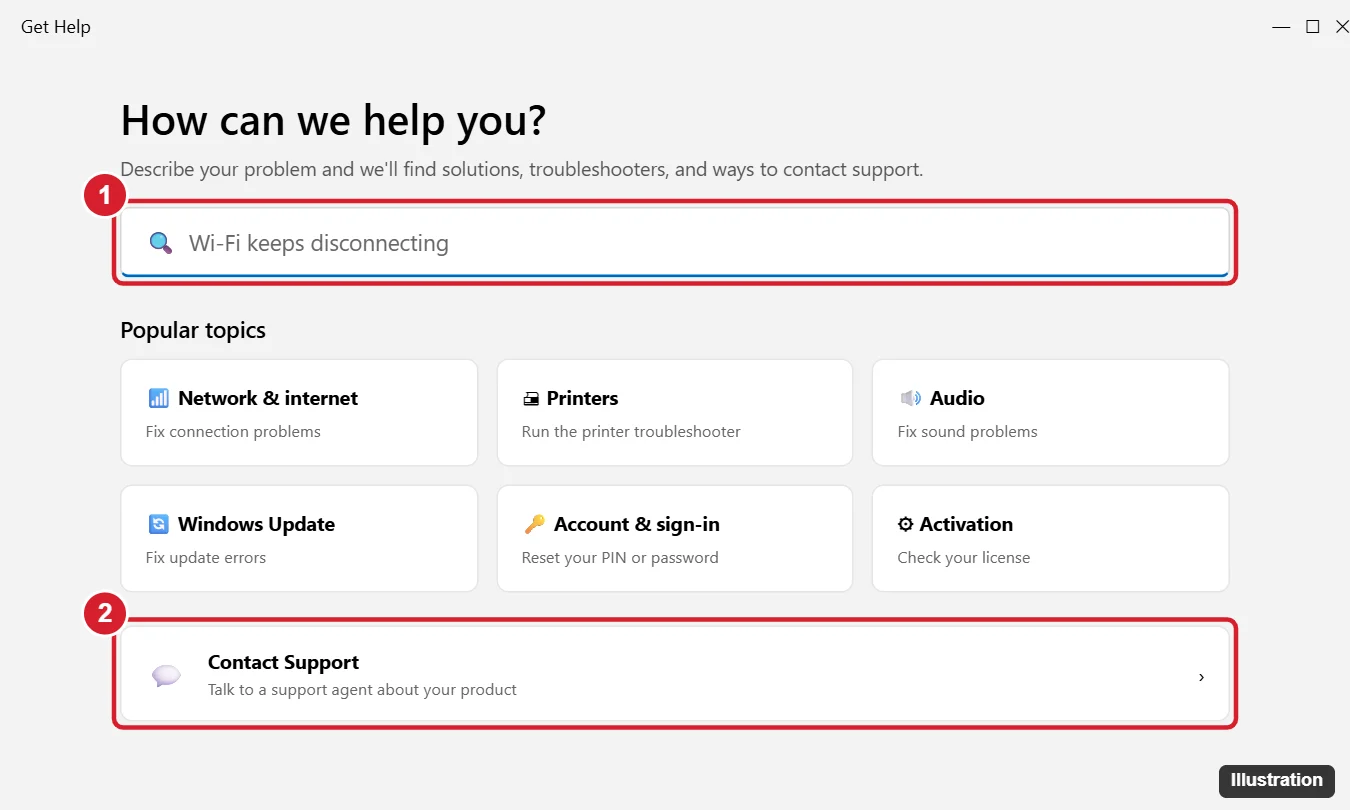
Press Windows key, type Get Help, and open the Get Help app. Describe your problem in the search box to get step-by-step solutions and automated troubleshooters. If they don’t solve it, scroll down and choose Contact Support to chat with a Microsoft agent.
Where to Get Help: Overview
| Option | Best for |
|---|---|
| Get Help app | Most problems; solutions, troubleshooters, and support contact |
| Troubleshooters | Automatic fixes for network, audio, printer, update, and camera problems |
| Settings search | Finding a setting you can’t locate |
| Tips app | Learning Windows 11 features |
| Quick Assist | Letting a trusted person fix your PC remotely |
| Microsoft Support website and Community | Detailed articles and answers from other users |
| PC manufacturer support | Hardware problems and warranty repairs |
1. Use the Get Help App
- Click Start, type Get Help, and open it. (It’s also in the All apps list.)
- Type a short description of your problem, such as “printer not printing” or “no sound.”
- Follow the suggested steps. For common issues, Get Help offers to run an automated troubleshooter and asks permission to collect diagnostic information.
- At the bottom, answer Did this solve your problem?. If not, you’ll see more options.
Get Help needs an internet connection. If you can’t get online at all, skip to the troubleshooters or ask someone to help you with the network settings.
2. Run a Troubleshooter
- Go to Settings > System > Troubleshoot > Other troubleshooters.
- Click Run next to the problem area, such as Network and Internet, Audio, Printer, or Windows Update.
Microsoft has been moving these troubleshooters into the Get Help app, so clicking Run may open Get Help. Both paths lead to the same automated fixes. You can also right-click the network or volume icon in the taskbar and choose Diagnose network problems or Troubleshoot sound problems.
3. Search Settings or Press F1
- Press Windows + I and use the search box at the top of Settings to find any option by name.
- In many built-in apps, pressing F1 opens help for that app. On the desktop, F1 opens a web search about Windows help in your browser.
- The Windows search box on the taskbar also finds settings: type “Bluetooth” or “display” and select the result.
4. Learn With the Tips App
Open Tips from Start for short guides on Windows 11 features like Snap layouts, widgets, and keyboard shortcuts. It’s a good starting point if you’re new to Windows 11.
5. Let Someone You Trust Help With Quick Assist
- Both of you open Quick Assist (search for it in Start; it can be installed from the Microsoft Store if missing).
- The helper signs in with a Microsoft account and clicks Help someone to get a security code.
- You enter the code under Get help and click Submit, then choose whether to allow screen sharing only or full control.
- End the session anytime with the Leave or close button.
Only use Quick Assist with someone you know. Never give a code to someone who contacted you unexpectedly.
6. Contact Microsoft Support
- In Get Help, search your problem, then scroll down and click Contact Support.
- Choose your product (for example, Windows) and category.
- Pick an available option, typically chat with an agent in your browser. Options vary by country, product, and whether your Windows license came with your PC.
You can also start from Microsoft’s official support website at support.microsoft.com, which has searchable articles and a Contact us page. The Microsoft Community forums (answers.microsoft.com) are useful for unusual issues.
7. Hardware Problems: Your PC Maker
For broken screens, batteries, keyboards, or driver issues, your PC manufacturer is often the better contact. Many preinstall a support app (for example, HP Support Assistant, Dell SupportAssist, or Lenovo Vantage) that checks warranty status, updates drivers, and runs hardware tests.
Avoid Tech Support Scams
- Microsoft doesn’t make unsolicited calls or show pop-ups with phone numbers asking you to call about a virus.
- Never let someone who contacted you first connect to your PC remotely, and never pay with gift cards.
- If a browser page locks your screen with warnings, close the browser with Ctrl + Shift + Esc (Task Manager > End task).
- Only use support links from Get Help, Settings, or the official Microsoft website.
Frequently Asked Questions
Is Microsoft support free?
Help articles, troubleshooters, and community forums are free. Support for Windows is generally free for issues covered by your license, though some advanced or business support may cost extra.
The Get Help app won’t open. What now?
Go to Settings > Apps > Installed apps, find Get Help, click the three dots, choose Advanced options, and click Repair or Reset. You can also reinstall it from the Microsoft Store.
How do I get help if Windows won’t start?
Turn the PC on and off three times during startup to open the recovery environment, then choose Troubleshoot > Advanced options > Startup Repair.
Summary
- Open the Get Help app and describe your problem.
- Run a troubleshooter for common issues.
- Use Quick Assist for help from someone you trust.
- Choose Contact Support in Get Help to reach Microsoft.
- Ignore unsolicited “support” calls and pop-ups.

Kermit Matthews runs Live2Tech from just outside Philadelphia. He started on a university help desk, spent years as the IT person for small businesses, and has been writing tech guides full time since 2020. Each guide is checked on a device he owns, and re-checked when a menu moves. More about Kermit.