An activated copy of Windows 10 is genuine and fully licensed, which unlocks personalization settings and removes the "Activate Windows" watermark. If you bought a used PC, reinstalled Windows, or replaced hardware, it is worth checking that activation is still in place. This guide shows several ways to check, what each status message means, and what to do if Windows is not activated.
Quick Answer
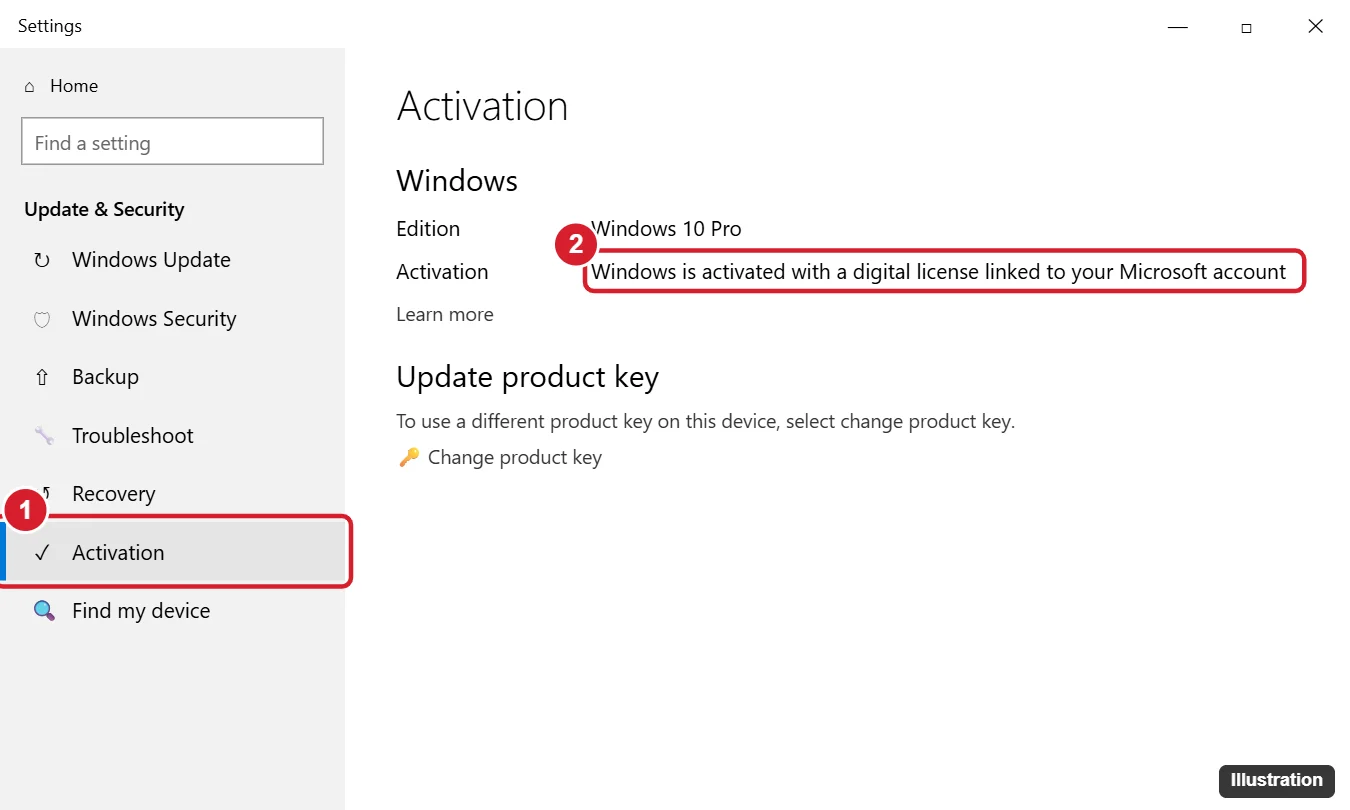
Go to Settings > Update & Security > Activation. Next to Activation, you will see a message such as Windows is activated with a digital license. If it says Windows is not activated, you will see an error code and options to troubleshoot or enter a product key.
Method 1: Settings App
- Press Windows key + I to open Settings.
- Click Update & Security.
- Click Activation in the left pane.
- Read the Activation line under the Windows section.
Shortcut: press Windows key + R, type ms-settings:activation, and press Enter.
What the Activation Messages Mean
| Message | Meaning |
|---|---|
| Windows is activated with a digital license linked to your Microsoft account | Activated, and the license is tied to your account, which helps reactivate after hardware changes |
| Windows is activated with a digital license | Activated, but not linked to a Microsoft account |
| Windows is activated using your organization's activation service | Activated through a work or school license |
| Windows is not activated | No valid license found; an error code is shown |
Method 2: System Properties
- Press Windows key + Pause/Break, or open Settings > System > About. In older layouts, open Control Panel > System and Security > System.
- Look for Windows activation or a link that says Windows is activated.
Method 3: Command Prompt
- Press Windows key + R, type cmd, and press Enter.
- Type
slmgr /xprand press Enter.
A small window says The machine is permanently activated if Windows is activated. For more detail, including the partial product key and license channel, run slmgr /dli or slmgr /dlv.
Other Signs Windows Is Not Activated
- An Activate Windows watermark in the bottom-right corner of the screen.
- Personalization options, such as changing the wallpaper or colors in Settings, are grayed out.
- Periodic notifications asking you to activate.
What to Do If Windows Is Not Activated
- Run the Activation troubleshooter: on the Activation page, click Troubleshoot. It is especially useful after replacing a motherboard or other major hardware. Choose I changed hardware on this device recently and sign in with the Microsoft account linked to your license.
- Enter a product key: click Change product key and type your 25-character key.
- Check your edition: a Windows 10 Home key will not activate Windows 10 Pro, and vice versa.
- Connect to the internet: activation needs an internet connection.
- Buy a license: click Go to the Store on the Activation page to purchase one from Microsoft.
Avoid unofficial activation tools and key websites offering prices that seem too good to be true. They can contain malware or give keys that later stop working.
Link Your License to a Microsoft Account
If the status says activated but not linked, click Add an account on the Activation page (or sign in with a Microsoft account in Settings > Accounts > Your info). Linking makes it much easier to reactivate after hardware changes.
A Note on Windows 10 Support
Microsoft ended standard support for Windows 10 in October 2025. An activated Windows 10 PC still works, but it no longer receives regular security updates unless enrolled in Extended Security Updates. Consider upgrading to Windows 11 if your PC supports it.
Frequently Asked Questions
What happens if Windows 10 is not activated?
Windows keeps working, but personalization settings are locked, a watermark appears, and you will see reminders to activate.
Does reinstalling Windows remove activation?
Usually not. A digital license reactivates automatically when you reinstall the same edition on the same hardware.
How do I find my product key?
Many PCs have the key embedded in the firmware. If you bought a retail copy, the key is on the packaging or in your confirmation email. Digital licenses may not have a visible key.
Summary
- Go to Settings > Update & Security > Activation.
- Or run
slmgr /xprin Command Prompt. - If not activated, use the troubleshooter, enter a valid key, or buy a license.
- Link your license to a Microsoft account for easier reactivation.

Kermit Matthews is a freelance writer based in Philadelphia, Pennsylvania with more than a decade of experience writing technology guides. He has a Bachelor’s and Master’s degree in Computer Science and has spent much of his professional career in IT management.
He specializes in writing content about iPhones, Android devices, Microsoft Office, and many other popular applications and devices.