Windows 11 opens web links in Microsoft Edge until you choose another default browser. Recent versions make the switch easy: one Set default button in Settings moves web links and the common web file types to your browser in a single click, and most browsers can start the change for you. This guide covers every method, how to fix links that still open in Edge, per-file-type defaults, what’s different for work PCs and in the European Economic Area, and the steps for Windows 10.
Quick Answer
Go to Settings > Apps > Default apps, click your browser in the list, and click Set default at the top of its page.
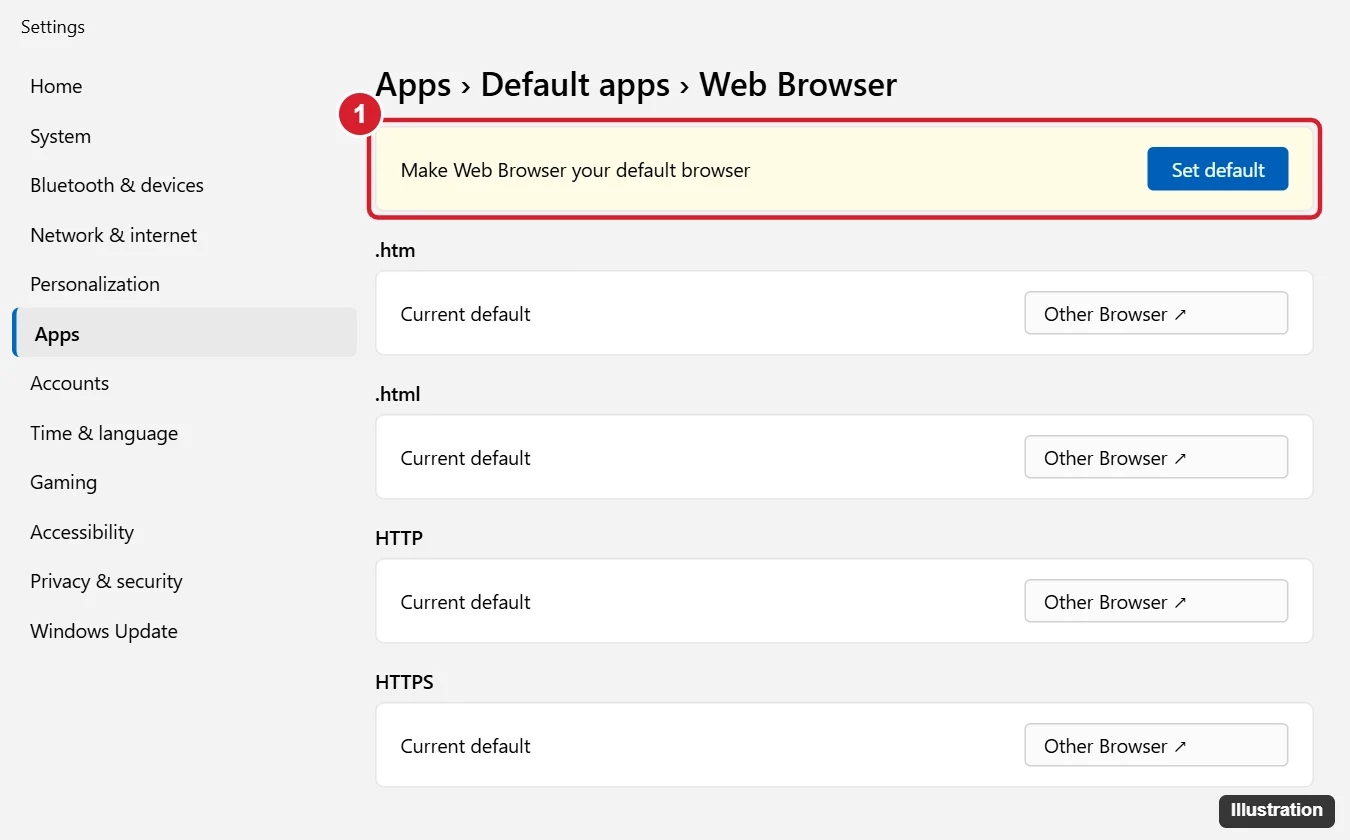
Method 1: Settings (One Click)
- Install the browser you want and open it at least once.
- Press Windows + I and go to Apps > Default apps.
- Find your browser in the list, or type its name in Search apps, and click it.
- Click Set default next to Make [browser] your default browser.
This assigns HTTP, HTTPS, .htm and .html, plus other common web types. If you don’t see the Set default button, install the latest Windows updates from Settings > Windows Update.
Method 2: From the Browser
- Chrome: Settings > Default browser > Make default.
- Firefox: Settings > General > Make Default.
- Brave, Opera, Vivaldi: look for Default browser in settings.
Most browsers either set themselves directly or open the Windows Default apps page for you to click Set default. For Chrome-specific steps, see how to make Google Chrome the default browser on Windows 11.
Method 3: Change Individual File and Link Types
- Open Settings > Apps > Default apps and click your browser.
- Click the app shown under a type, such as .pdf, .svg, .webp or FTP.
- Choose the browser and click Set default.
You can also scroll to Choose defaults by file type or Choose defaults by link type at the bottom of the Default apps page. Many people keep PDFs in a dedicated reader and only move web links to their browser.
Links Still Open in Edge?
- Windows features that use Edge: links from Windows Search, Widgets, Copilot, and some help pages open in Edge regardless of your default in many regions. Outside the EEA, Windows doesn’t provide a supported way to change this.
- Outlook and Teams: these apps have their own setting to open links in Edge or your default browser. In Outlook, look under File > Options > Advanced > File and browser preferences.
- Specific file types: check .pdf and .html under your browser in Default apps.
- Browser update reset it: set the default again; updates sometimes clear it.
Avoid third-party tools that force all Edge links elsewhere; they can break after updates.
European Economic Area Differences
Under the Digital Markets Act, Windows 11 in the EEA respects your default browser for more links, including many from Windows Search and Widgets, and lets you uninstall Edge. Behavior depends on your region setting and Windows version.
Work or School PCs
If the Default apps page is locked or your choice resets after a restart, your organization may set the default browser through policy. Contact your IT team.
Change the Default Browser in Windows 10
- Click Start > Settings and select Apps.
- Select Default apps.
- Under Web browser, click the browser that’s currently listed (often Microsoft Edge).
- Choose the browser you want from the list. If Windows suggests keeping Edge, click Switch anyway if the prompt appears.
Windows 10 assigns web links to the new browser right away. To check individual types such as .pdf, scroll down and click Choose default apps by file type. Picking a default browser does not choose its search engine, so also check which search engine each Windows 11 browser uses.
Note: Windows 10 reached end of support on October 14, 2025. Consumer Extended Security Updates (ESU) now run until October 12, 2027. These steps still work on Windows 10, but upgrading to Windows 11 is the long-term way to keep getting security fixes.
More: how to set default apps in Windows 11.
Where to Find “Make Default” in Popular Browsers
| Browser | Path |
|---|---|
| Google Chrome | Menu (three dots) > Settings > Default browser > Make default |
| Mozilla Firefox | Menu (three lines) > Settings > General > Make Default |
| Microsoft Edge | Menu (three dots) > Settings > Default browser > Make default |
| Brave, Opera, Vivaldi | Settings, then search for “default browser” |
On Windows 11, clicking these usually opens the Default apps page with your browser selected, so you still click Set default to finish.
Frequently Asked Questions
Can I uninstall Edge after changing the default?
Only in the EEA. Elsewhere, Edge stays installed because parts of Windows use it.
Why does Windows ask me to “try Edge” after switching?
Edge sometimes shows prompts when you change defaults. You can dismiss them; your choice stays.
How do I set the default browser for a single user?
Defaults are per user. Sign in to each account and set them separately.
Why isn’t my browser in the list?
It isn’t installed for your user account, or it hasn’t been opened yet. Install it from the developer’s website or the Microsoft Store, open it once, then return to Default apps.
Do I need to restart after changing it?
No. The change applies immediately. Restart any app that was open if its links still go to the old browser.
Will changing the default delete my bookmarks or passwords?
No. Each browser keeps its own data. To move bookmarks, use the new browser’s import option.
Summary
- Settings > Apps > Default apps > your browser > Set default.
- Or use your browser’s own Make default option.
- Adjust individual types like .pdf if needed.
- Some Windows links still open in Edge outside the EEA.
Microsoft’s reference: Change default apps in Windows.

Kermit Matthews runs Live2Tech from just outside Philadelphia. He started on a university help desk, spent years as the IT person for small businesses, and has been writing tech guides full time since 2020. Each guide is checked on a device he owns, and re-checked when a menu moves. More about Kermit.