OtterBox's Commuter and Symmetry series are two of the most popular iPhone 14 cases, and they aim at slightly different people. The Commuter is a two-layer case built for extra grip and drop protection, while the Symmetry is a slimmer one-piece case that balances protection with a sleek profile. This guide compares them on design, protection, bulk, grip, MagSafe support, and style so you can pick the right one.
Product lines, colors, prices, and certifications change over time. Check OtterBox's website or the retailer listing for the exact model you are considering, especially whether it is made for the iPhone 14, 14 Plus, 14 Pro, or 14 Pro Max.
Quick Answer
Choose the Commuter if you want maximum drop protection and grip from a two-layer design and do not mind a bit more bulk. Choose the Symmetry if you want solid everyday protection in a thinner, one-piece case that slides easily into pockets and comes in more styles, including clear versions.
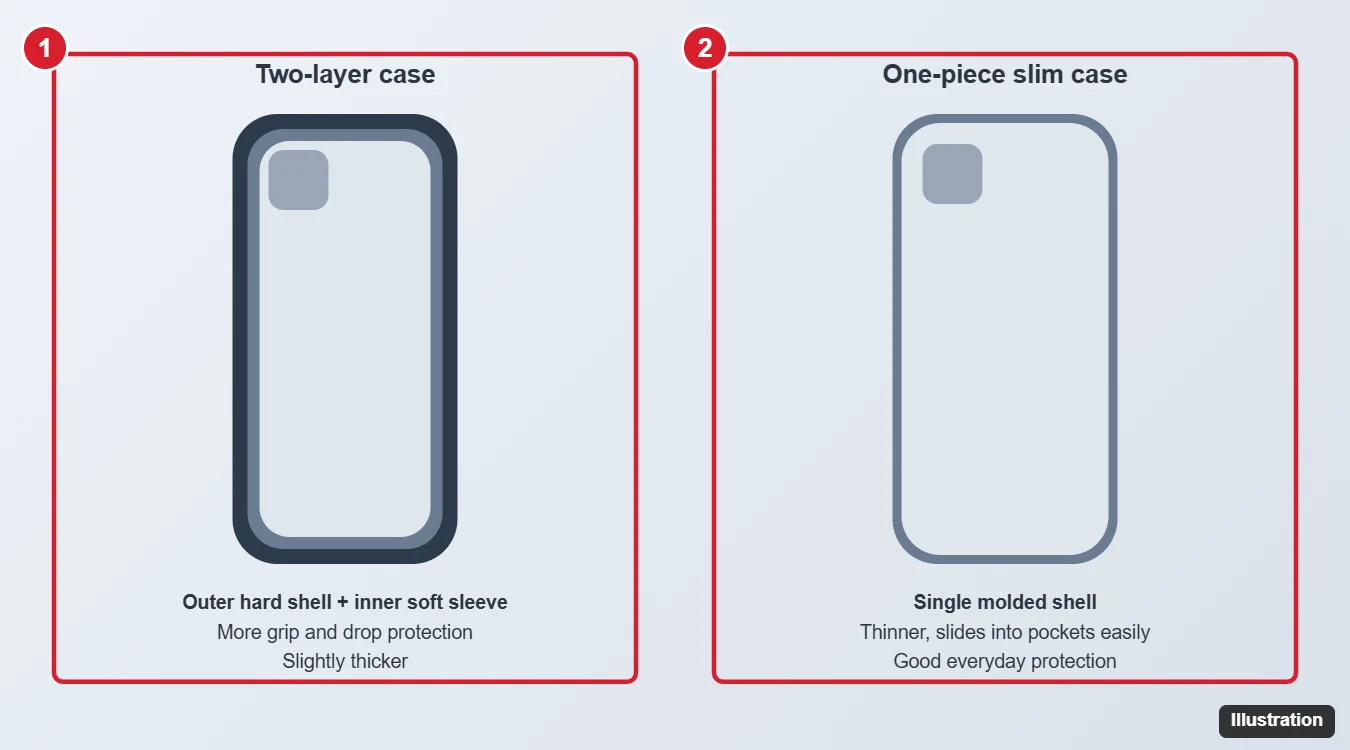
Side-by-Side Comparison
| Commuter | Symmetry | |
|---|---|---|
| Construction | Two pieces: soft inner slipcover and hard outer shell | One piece: molded hard back with flexible edges |
| Thickness | Thicker | Slimmer |
| Drop protection | Rated for tough everyday drops; generally more cushioning | Rated for everyday drops; slightly less cushioning |
| Grip | Textured, grippy edges | Smoother finish (varies by style) |
| Port covers | Often includes covers on some models | Open ports |
| Styles | Mostly solid colors | Many colors, patterns, and clear options |
| MagSafe | MagSafe versions available | MagSafe versions available |
| Installation | Two steps; slightly harder to remove | Snaps on and off easily |
Design and Feel
The Commuter wraps the iPhone 14 in a soft inner layer that absorbs impacts, then covers it with a hard outer shell. The result feels secure and grippy in the hand but adds noticeable bulk. The Symmetry is a single piece with a thin profile that feels closer to the phone's original shape. It is easier to slip into tight pockets and small bags.
Protection
Both cases are designed to protect against everyday drops, and both have raised edges around the screen and camera. The Commuter's two-layer build gives it an edge in shock absorption, which matters if you drop your phone often or work in active environments. For typical daily use, the Symmetry protects well while staying slim. Neither is waterproof; for extreme conditions, OtterBox's heavier-duty lines offer more protection. Pair either case with a screen protector for full coverage.
MagSafe and Wireless Charging
Both lines are available in MagSafe-compatible versions with built-in magnets for MagSafe chargers, wallets, and mounts. Standard (non-MagSafe) versions still support wireless charging but will not snap to MagSafe accessories as firmly. Check the product name for "MagSafe" if that matters to you.
Who Should Buy Which
- Commuter: people who drop their phones often, work outdoors or in warehouses, prefer extra grip, or want port covers.
- Symmetry: people who want a slim, stylish case, prefer clear or patterned designs, or frequently take the case on and off.
Buying Tips
- Match the exact model: iPhone 14 and iPhone 14 Pro cases are not interchangeable because the camera bumps differ.
- Buy from reputable sellers to avoid counterfeits.
- Check the warranty terms on OtterBox's site.
Related: put an iPad in an OtterBox Defender case.
Frequently Asked Questions
Is the Commuter more protective than the Symmetry?
Generally yes, thanks to its two-layer construction, though both handle everyday drops well.
Do these cases fit the iPhone 15?
Buy the case made for your exact model. Even when dimensions look similar, camera and button placement can differ.
Which case is easier to remove?
The Symmetry. The Commuter's two layers take a little more effort.
Summary
- Commuter: two layers, more grip and cushioning, thicker.
- Symmetry: one piece, slimmer and more stylish, easy on and off.
- Both offer MagSafe versions; choose based on how much bulk you are willing to carry.

Kermit Matthews is a freelance writer based in Philadelphia, Pennsylvania with more than a decade of experience writing technology guides. He has a Bachelor’s and Master’s degree in Computer Science and has spent much of his professional career in IT management.
He specializes in writing content about iPhones, Android devices, Microsoft Office, and many other popular applications and devices.