Recording “what you hear” on a Windows 11 PC, such as audio from a web page, a video call you have permission to record, a game, or a sound from an app, isn’t obvious. The built-in Sound Recorder records from a microphone by default, not from your speakers. You can still capture system audio in several ways: turn on Stereo Mix, use Audacity‘s loopback recording, record audio with video in Snipping Tool or Xbox Game Bar, or use OBS Studio. This guide explains each method, when to use it, and how to fix silent recordings.
Quick Answer
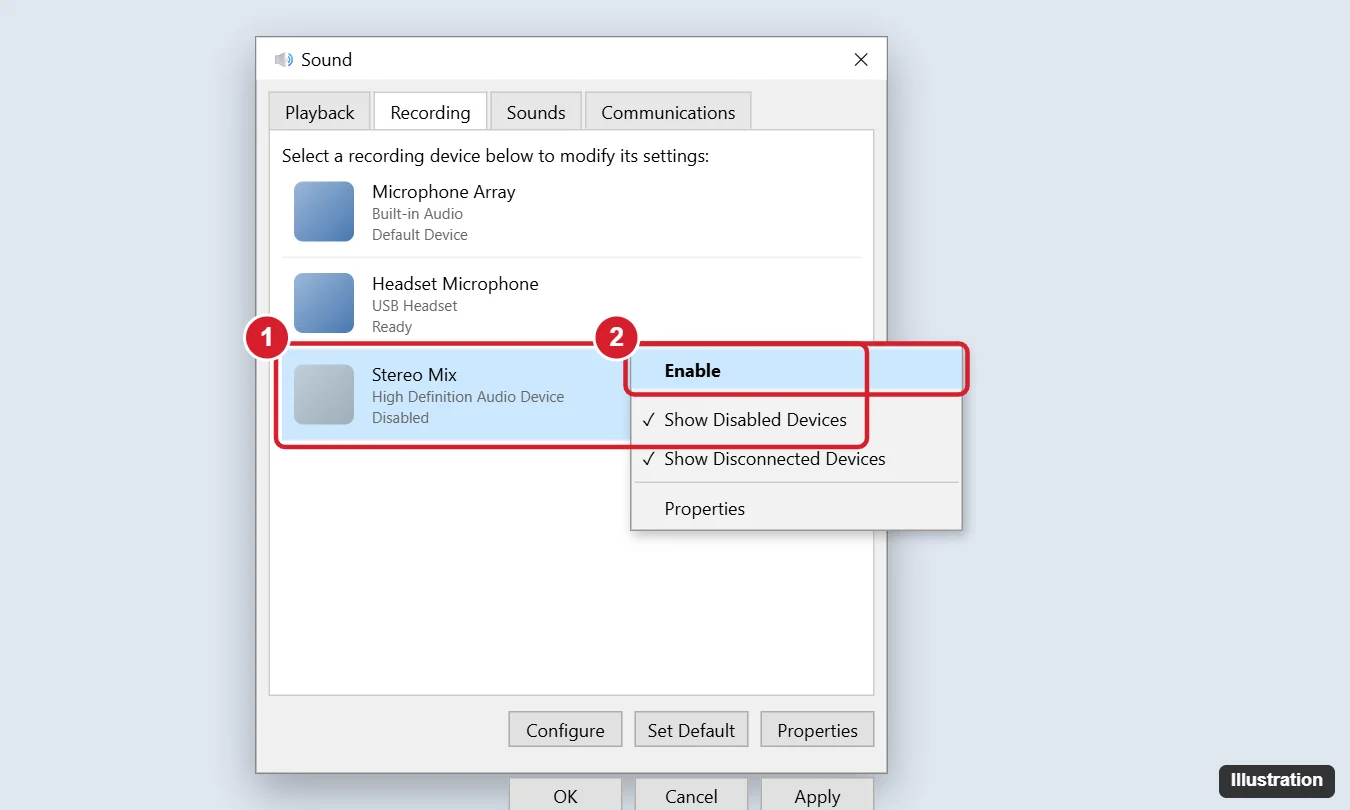
The most reliable free option is Audacity. Set the audio host to Windows WASAPI, choose your speakers or headphones with (loopback) as the recording device, and click Record. For a built-in option, turn on Stereo Mix: go to Settings > System > Sound > More sound settings > Recording, right-click, choose Show Disabled Devices, then enable Stereo Mix. Then record with the Sound Recorder app using Stereo Mix as the input.
Which Method Should You Use?
| Method | Audio only? | Built in? | Best for |
|---|---|---|---|
| Audacity (WASAPI loopback) | Yes | No (free) | High-quality audio on any PC, plus editing |
| Stereo Mix + Sound Recorder | Yes | Yes, if your driver offers Stereo Mix | Quick recordings without installing anything |
| Snipping Tool screen recording | No (video + audio) | Yes | Recording a screen area with system sound |
| Xbox Game Bar (Win + Alt + R) | No (video + audio) | Yes | Games and single app windows |
| OBS Studio | Either | No (free) | Mixing system audio and microphone, long recordings |
Method 1: Audacity with WASAPI Loopback
- Download Audacity from its official website and install it.
- In the toolbar (or Audio Setup > Host), set the host to Windows WASAPI.
- Set the recording device to your output device with (loopback) after its name, for example “Speakers (loopback)” or “Headphones (loopback).”
- Set channels to 2 (Stereo).
- Click the red Record button and play the audio you want to capture.
- Click Stop, then File > Export Audio and choose MP3, WAV, or another format.
Loopback records whatever plays through the selected output device, so notification sounds will be recorded too. Turn on Do not disturb first.
Method 2: Stereo Mix and Sound Recorder (Built In)
Turn on Stereo Mix
- Open Settings > System > Sound and click More sound settings. You can also press Win + R and run
mmsys.cpl. - Click the Recording tab.
- Right-click an empty area and check Show Disabled Devices.
- Right-click Stereo Mix and choose Enable.
If Stereo Mix never appears, your audio driver doesn’t provide it. Updating the audio driver from your PC maker sometimes adds it. Otherwise, use Audacity or OBS.
Record with Sound Recorder
- Open Sound Recorder from Start.
- Click the microphone menu at the bottom left and choose Stereo Mix.
- Click Record (or press Ctrl + R), play your audio, and click Stop.
- Recordings are saved in Documents > Sound Recordings. Change the format (for example, MP3 or WAV) in Sound Recorder’s settings.
Stereo Mix may record at a lower level or pick up system sounds. Keep the playback volume at a normal level for the best result.
Method 3: Snipping Tool (Screen and Audio)
- Open Snipping Tool and switch to Record (the video camera icon).
- Make sure the system audio (speaker) button is on. Turn the microphone button on only if you want your voice too.
- Click New, select the area, and click Start.
- Stop the recording and save the MP4.
To get audio only, open the MP4 in Clipchamp or Audacity and export just the audio. Audio recording requires a recent version of Snipping Tool, so update it in the Microsoft Store if the audio buttons are missing.
Method 4: Xbox Game Bar
- Open the app or game you want to record.
- Press Windows key + Alt + R to start recording, and press it again to stop.
- Find the clip in Videos > Captures.
Game Bar records a single app window and doesn’t work on the desktop or File Explorer. In Settings > Gaming > Captures, set Audio to record to Game or All.
Method 5: OBS Studio
OBS Studio (free) captures Desktop Audio by default. You can record audio only by adding no video sources, or set the output to an audio format in advanced settings. It is the best choice when you need your microphone and system audio on separate tracks.
Troubleshooting
The recording is silent
Check that you selected the loopback or Stereo Mix device, not the microphone, and that the audio actually played through that output device. For example, if you listen on Bluetooth headphones, choose “Headphones (loopback)” in Audacity.
Audio from streaming services records as silence
Some protected content blocks recording. This is intentional and can’t be worked around with these tools.
The recording sounds distorted or too quiet
Lower the playback volume if it clips, and turn off audio enhancements under Settings > System > Sound > (your device) > Audio enhancements.
Respect Copyright and Consent
Recording content for personal use may still be restricted by a service’s terms. Recording calls without the other participants’ consent may be illegal where you live. Get permission first.
Frequently Asked Questions
Does Windows 11 have a built-in way to record internal audio?
Yes, partly. Stereo Mix (if your driver supports it) with Sound Recorder records audio only. Snipping Tool and Xbox Game Bar record system audio along with video.
Can I record computer audio and my microphone together?
Yes. Snipping Tool and Game Bar can include the microphone, and OBS can record both on separate tracks.
Does this work on Windows 10?
Yes. Audacity, Stereo Mix, Game Bar, and OBS work the same way in Windows 10. The Windows 10 Sound settings layout is slightly different.
Summary
- Best free method: Audacity with Windows WASAPI and a (loopback) device.
- Built in: enable Stereo Mix and record with Sound Recorder.
- With video: use Snipping Tool with system audio on, or Game Bar (Win + Alt + R).
- Use OBS to mix system and microphone audio.
- Get consent and respect copyright.

Kermit Matthews is a freelance writer based in Philadelphia, Pennsylvania with more than a decade of experience writing technology guides. He has a Bachelor’s and Master’s degree in Computer Science and has spent much of his professional career in IT management.
He specializes in writing content about iPhones, Android devices, Microsoft Office, and many other popular applications and devices.