The Facebook app on iPhone can hold more than one account, so you can switch between a personal account and another account without logging out each time. Facebook also lets one account have multiple profiles (such as a Page or an additional profile), which work a little differently. This guide covers adding and switching accounts, using profiles, removing an account from your iPhone, and keeping each account secure.
Quick Answer
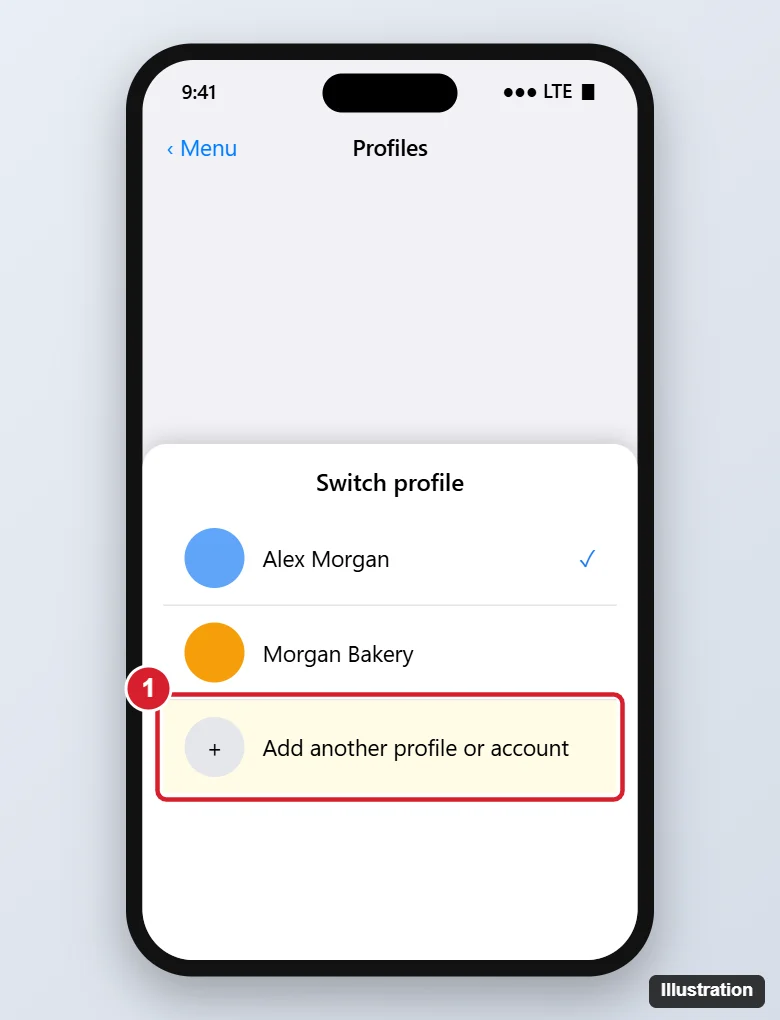
In the Facebook app, tap Menu (your profile picture or the three lines), tap the down arrow next to your name, and choose Add another profile or account, then Log into existing account. Switch between them from the same menu.
Accounts vs. Profiles
| Separate account | Additional profile or Page | |
|---|---|---|
| Login | Its own email or phone and password | Uses your main account’s login |
| Best for | A second person, or fully separate identity | A business Page, creator profile or hobby profile |
| Where to manage | Accounts Center | Profile switcher and Pages settings |
Facebook’s rules allow one personal account per person; use profiles or Pages for business or interests rather than creating extra personal accounts.
Add a Second Account
- Open the Facebook app and tap Menu.
- Tap the down arrow next to your name at the top.
- Tap Add another profile or account.
- Choose Log into existing account and enter that account’s email or phone number and password.
- Complete any two-factor check.
Switch Between Accounts
- Tap Menu, then the down arrow next to your name.
- Tap the account or profile you want.
Notifications may show for all accounts on the device; adjust them in each account’s Settings & privacy > Settings > Notifications.
Create an Additional Profile
- Tap Menu > down arrow > Create new profile or Page (wording varies).
- Choose Profile or Page and follow the prompts.
Remove an Account From Your iPhone
- Switch to the account and tap Menu > Settings & privacy > Settings.
- Open Accounts Center > Password and security > Where you’re logged in, select this iPhone, and log out. Or scroll to the bottom of Menu and tap Log out.
- On the login screen, tap the three dots next to a saved account and choose Remove account from this device.
Security Tips
- Turn on two-factor authentication for each account in Accounts Center.
- Don’t save passwords on a shared iPhone; use Face ID or a passcode on the device.
- Use different passwords for each account.
Messenger and Other Apps
Messenger has its own account switcher: tap Menu (three lines), then the gear icon, and use Switch account. Instagram accounts can be linked through Accounts Center for easier switching.
Each account has its own viewing history. To clean one up, see how to clear your Facebook watch history.
Troubleshooting
- Add account option missing: update the app in the App Store.
- Stuck on one account: log out, then log in with the other account; both will be saved for switching.
- Login codes not arriving: check the phone number or authenticator app set up on that account.
Frequently Asked Questions
How many accounts can I add?
The app supports several saved accounts, but the exact limit can change.
Can I use Facebook in Safari for a second account?
Yes. Log into one account in the app and another at facebook.com in Safari.
Summary
- Menu > down arrow > Add another profile or account.
- Switch from the same menu.
- Use profiles or Pages instead of extra personal accounts.
- Remove saved accounts from the login screen.

Kermit Matthews is a freelance writer based in Philadelphia, Pennsylvania with more than a decade of experience writing technology guides. He has a Bachelor’s and Master’s degree in Computer Science and has spent much of his professional career in IT management.
He specializes in writing content about iPhones, Android devices, Microsoft Office, and many other popular applications and devices.