Google sends weather notifications, like daily forecasts, rain alerts, and severe weather warnings, through the Google app on Android and iPhone. If they’re more annoying than useful, you can turn them off without losing other Google notifications. Where the switch is depends on your phone and Google app version, so this guide covers every place to look, plus how to keep only severe weather alerts.
Quick Answer
On Android, open Settings > Apps > Google > Notifications and turn off the Weather categories. Or long-press a weather notification when it appears and tap Turn off notifications (or the settings gear). On iPhone, open the Google app, tap your profile picture > Settings > Notifications, and turn off weather.
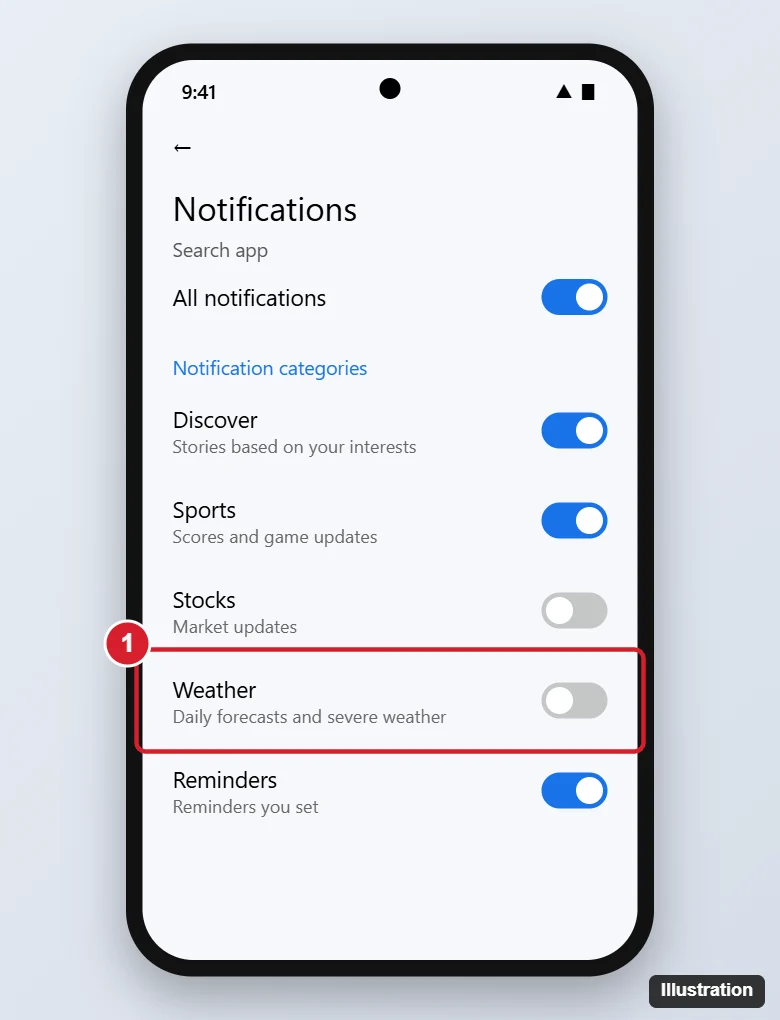
Fastest Way: From the Notification Itself
- When a weather notification appears, touch and hold it (or swipe it slightly left or right and tap the gear icon).
- Tap Turn off notifications or choose Silent.
- If offered, tap the settings link to open that specific category and switch it off.
This turns off just that category (for example, daily forecasts) without affecting other notifications from the same app.
Android: Turn Off in Settings
- Open Settings > Apps (on some phones, Apps & notifications > See all apps).
- Tap Google.
- Tap Notifications.
- Scroll to the weather categories (names vary, such as Weather, Daily forecast, or Weather alerts) and turn them off.
Inside the Google app (Android)
- Open the Google app and tap your profile picture > Settings > Notifications.
- Find Weather (sometimes under Updates or Categories) and turn off the types you don’t want.
Pixel “At a Glance” weather
On Pixel phones, weather appears on the Home and Lock screen through At a Glance, which is separate from notifications. Touch and hold the At a Glance widget, tap Customize, and adjust Weather and Weather alerts.
iPhone and iPad
- Open the Google app.
- Tap your profile picture > Settings > Notifications.
- Turn off Weather (or the weather types listed).
To silence all Google app notifications instead, go to iPhone Settings > Notifications > Google and turn off Allow Notifications.
Keep Severe Weather Alerts Only
- In the notification categories, leave Severe weather or Weather alerts on and turn off Daily forecast.
- Government emergency alerts (such as tornado or flood warnings) come from your phone’s Wireless emergency alerts settings, not Google, and keep working either way. On Android, find them in Settings > Safety & emergency > Wireless emergency alerts; on iPhone, at the bottom of Settings > Notifications.
Still Getting Weather Notifications?
- They may come from another app, such as your phone maker’s weather app or a separate weather app. Long-press the notification to see which app sent it.
- Google Assistant routines can include weather. Check the Google app > Settings > Google Assistant > Routines.
- Update the Google app; older versions had different menu names.
Frequently Asked Questions
Will turning off weather notifications stop the weather widget?
No. Widgets and At a Glance update independently; remove the widget if you don’t want to see weather at all.
Can I change the language of weather notifications?
They follow your Google app or device language. Change it in the Google app’s language settings or your phone’s language settings.
Does turning off location stop weather notifications?
It may stop local forecasts, but it also affects maps and other features. Turning off the weather notification category is the cleaner fix.
Summary
- Long-press a weather notification and turn it off.
- Or go to Settings > Apps > Google > Notifications and disable Weather.
- On iPhone, use the Google app’s Settings > Notifications.
- Keep emergency alerts on in your phone’s emergency alert settings.

Kermit Matthews is a freelance writer based in Philadelphia, Pennsylvania with more than a decade of experience writing technology guides. He has a Bachelor’s and Master’s degree in Computer Science and has spent much of his professional career in IT management.
He specializes in writing content about iPhones, Android devices, Microsoft Office, and many other popular applications and devices.