iPhone backups can take up tens of gigabytes, and on Windows 11 they always save to your C: drive, which quickly fills up small SSDs. Neither the Apple Devices app nor iTunes lets you pick a different backup location, but you can redirect the backup folder to an external hard drive with a directory junction. This guide walks through the process safely, plus simpler options if you only need to save photos.
Quick Answer
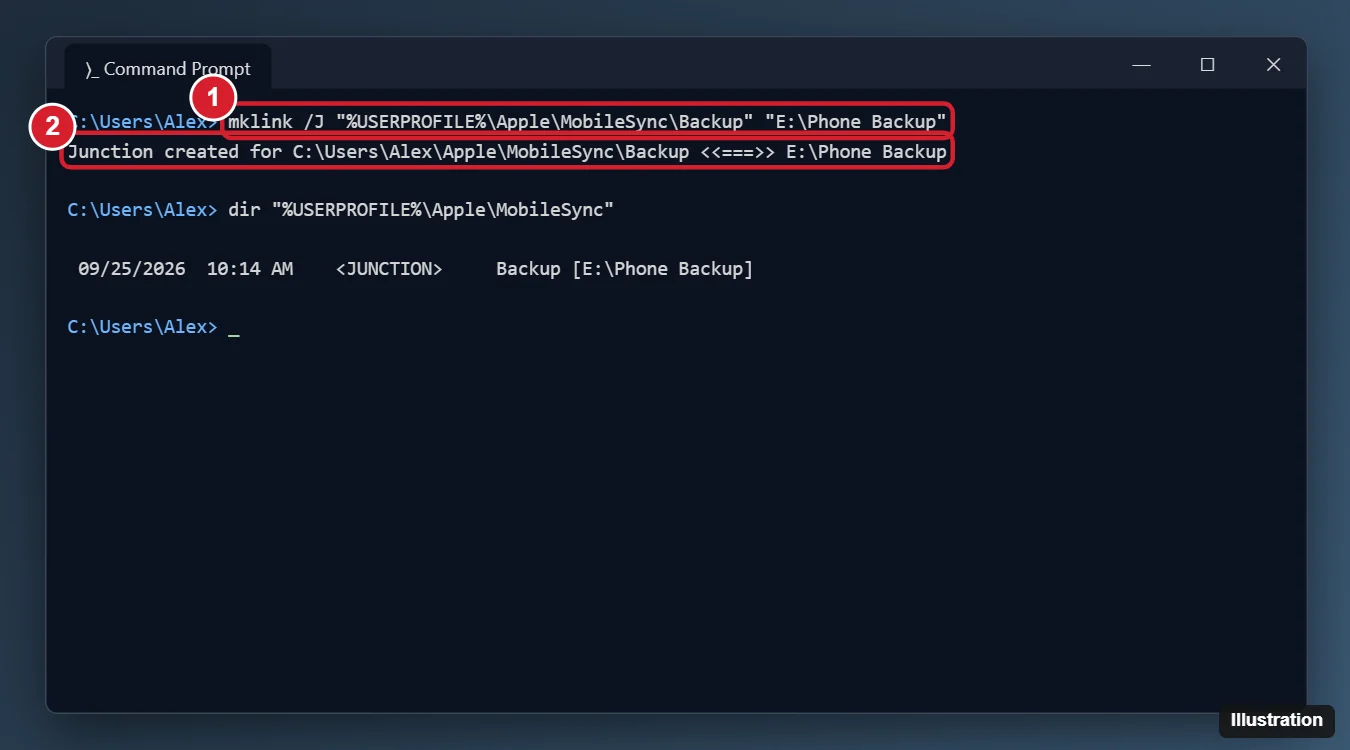
Move the Backup folder from your PC’s MobileSync folder to the external drive, then open Command Prompt and run mklink /J "%USERPROFILE%\Apple\MobileSync\Backup" "E:\iPhone Backup" (adjust the path and drive letter). Now back up in the Apple Devices app as usual; the data goes to the external drive.
Before You Start
- Install Apple Devices (recommended on Windows 11) or iTunes, and make sure your iPhone has backed up at least once so the folder exists.
- Use an external drive formatted as NTFS (exFAT also works) with plenty of free space.
- Keep the external drive connected and assigned the same drive letter whenever you back up.
- Close Apple Devices and iTunes before moving folders.
Step 1: Find Your Current Backup Folder
The location depends on which app you use:
- Apple Devices app or iTunes from the Microsoft Store:
%USERPROFILE%\Apple\MobileSync\Backup - iTunes downloaded from Apple’s website:
%APPDATA%\Apple Computer\MobileSync\Backup
Paste the path into the File Explorer address bar to open it. Inside, each backup is a folder with a long code name.
Step 2: Move the Backup Folder
- Create a folder on the external drive, for example E:\iPhone Backup.
- Copy everything inside the Backup folder into the new folder, and wait for the copy to finish.
- Go back to the MobileSync folder and rename the original Backup folder to Backup.old (you’ll delete it later once everything works).
Step 3: Create the Junction
- Search for cmd and open Command Prompt.
- Run the command that matches your app, using your drive letter and folder name:
- Apple Devices / Store iTunes:
mklink /J "%USERPROFILE%\Apple\MobileSync\Backup" "E:\iPhone Backup" - iTunes from Apple’s site:
mklink /J "%APPDATA%\Apple Computer\MobileSync\Backup" "E:\iPhone Backup"
- Apple Devices / Store iTunes:
- You should see Junction created for…. A Backup shortcut-style folder appears in MobileSync.
Step 4: Back Up the iPhone
- Connect the iPhone with a cable, unlock it, and tap Trust if asked.
- Open Apple Devices, select your iPhone, go to General, choose Back up all of the data on your iPhone to this computer, and click Back Up Now. (In iTunes, click the phone icon, then Summary > Back Up Now.)
- Consider checking Encrypt local backup to include saved passwords and Health data. Store the password safely; you can’t restore without it.
- When finished, check that the external folder’s size has grown. Then delete Backup.old.
Only Need Photos and Videos?
If you just want pictures on the external drive, skip the junction:
- Connect and unlock the iPhone, then open the Photos app on Windows and click Import, or open the iPhone in File Explorer (This PC > Apple iPhone > Internal Storage > DCIM).
- Choose the external drive as the destination and import or copy the photos.
Setting Settings > Photos > Transfer to Mac or PC to Automatic converts HEIC photos to JPG during transfer for wider compatibility.
Troubleshooting
- “Cannot create a file when that file already exists”: the original Backup folder still exists. Rename it to Backup.old and run the command again.
- Backup fails or says the disk is unavailable: connect the external drive before opening Apple Devices and make sure the drive letter hasn’t changed (set a fixed letter in Disk Management).
- Backup still fills C:: you linked the wrong path. Check which app you use and where its MobileSync folder is.
- Undo the change: delete the Backup junction (it’s just a pointer), rename Backup.old back to Backup, or copy your backups back from the external drive.
Frequently Asked Questions
Is using a junction safe?
Yes. It’s a standard Windows feature that simply redirects a folder. Deleting the junction doesn’t delete the files on the external drive.
Can I back up directly to an external drive without the command?
Not with Apple’s apps on Windows. Some third-party backup tools let you choose a folder, but the junction method works with Apple’s official software.
How big is an iPhone backup?
It depends on your content. Photos synced to iCloud aren’t included, but app data and messages can still take many gigabytes.
Summary
- Find and copy the MobileSync Backup folder to the external drive.
- Rename the original folder.
- Run
mklink /Jto link the original path to the external folder. - Back up in Apple Devices or iTunes as normal.

Kermit Matthews is a freelance writer based in Philadelphia, Pennsylvania with more than a decade of experience writing technology guides. He has a Bachelor’s and Master’s degree in Computer Science and has spent much of his professional career in IT management.
He specializes in writing content about iPhones, Android devices, Microsoft Office, and many other popular applications and devices.