To update audio drivers on Windows 11, start with Windows Update: go to Settings > Windows Update > Advanced options > Optional updates, expand Driver updates, and install any audio driver listed. You can also open Device Manager, expand Sound, video and game controllers, right-click your audio device, and choose Update driver > Search automatically for drivers. For the newest driver made for your exact PC, check your PC maker’s support app or website.
Here’s each method, plus how to roll back a driver if sound stops working after an update.
Method 1: Windows Update
- Press Windows key + I and click Windows Update.
- Click Check for updates and install anything offered.
- Click Advanced options > Optional updates.
- Expand Driver updates, check any audio driver (often labeled Realtek, Intel, Conexant, or similar), and click Download & install.
- Restart your PC.
Method 2: Device Manager
- Right-click Start and choose Device Manager.
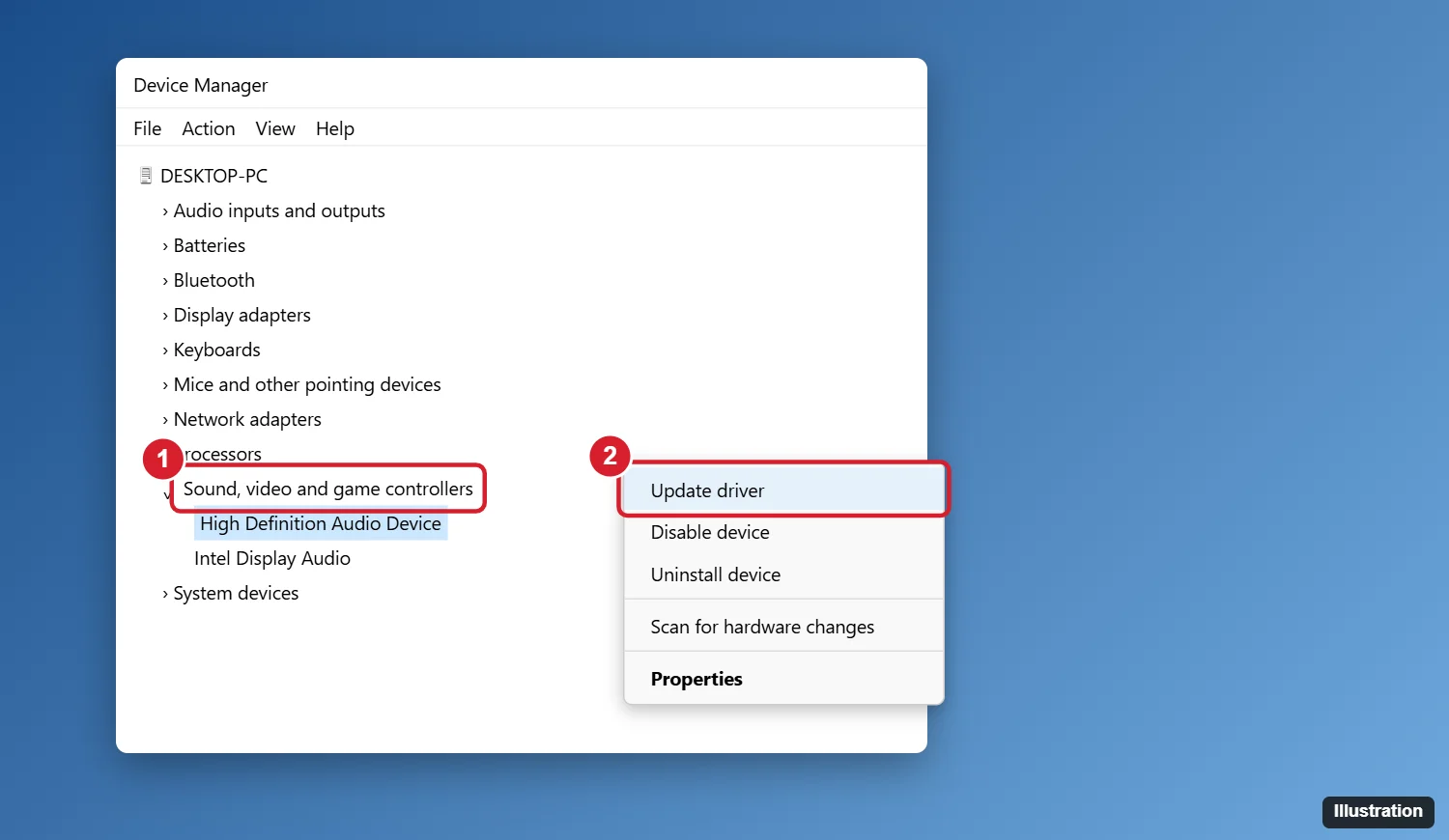
- Expand Sound, video and game controllers.
- Right-click your audio device and choose Update driver.
- Click Search automatically for drivers. If you downloaded a driver, choose Browse my computer for drivers instead.
Method 3: Your PC maker’s driver
Laptops and prebuilt PCs often use audio drivers customized by the maker, with features like special sound effects or microphone settings. Use your maker’s app, such as Dell SupportAssist, HP Support Assistant, Lenovo Vantage, or MyASUS, or download the audio driver for your model from the support website. For custom desktops, get the audio driver from your motherboard maker.
If sound stops working after an update
- Open Device Manager and expand Sound, video and game controllers.
- Right-click the audio device and choose Properties.
- On the Driver tab, click Roll Back Driver.
- Restart your PC.
If rolling back isn’t available, uninstall the device and restart. Windows reinstalls a basic driver automatically. For more, see how to uninstall and reinstall audio drivers in Windows 11.
Other quick sound fixes
- Check the output device: Click the speaker icon on the taskbar and the arrow next to the volume slider to pick the right speakers or headphones.
- Run the troubleshooter: Settings > System > Troubleshoot > Other troubleshooters > Audio.
- Restart Windows Audio: Press Windows key + R, type services.msc, right-click Windows Audio, and choose Restart.
Frequently asked questions
How do I know which audio driver I have?
In Device Manager, right-click the audio device, choose Properties, and open the Driver tab to see the provider and version.
Do I need to update audio drivers?
Only if you have sound problems or a new feature needs it. Windows Update handles most updates.
Is “High Definition Audio Device” a real driver?
Yes. It’s Microsoft’s generic audio driver. It works, but your PC maker’s driver may offer more features.
Why does Windows say the best driver is already installed?
Windows doesn’t have a newer one. Check your PC maker’s website.

Kermit Matthews is a freelance writer based in Philadelphia, Pennsylvania with more than a decade of experience writing technology guides. He has a Bachelor’s and Master’s degree in Computer Science and has spent much of his professional career in IT management.
He specializes in writing content about iPhones, Android devices, Microsoft Office, and many other popular applications and devices.