Windows 11 installs most driver updates automatically through Windows Update, but some arrive as optional updates you have to pick yourself, and others come only from your PC or graphics card maker. This guide shows every way to check for driver updates on Windows 11: Optional updates in Settings, Device Manager, manufacturer tools, and how to see which driver version you have, roll back a bad update, and stop Windows from replacing a driver.
Quick Answer
Go to Settings > Windows Update > Advanced options > Optional updates, expand Driver updates, check the ones you need, and click Download & install.
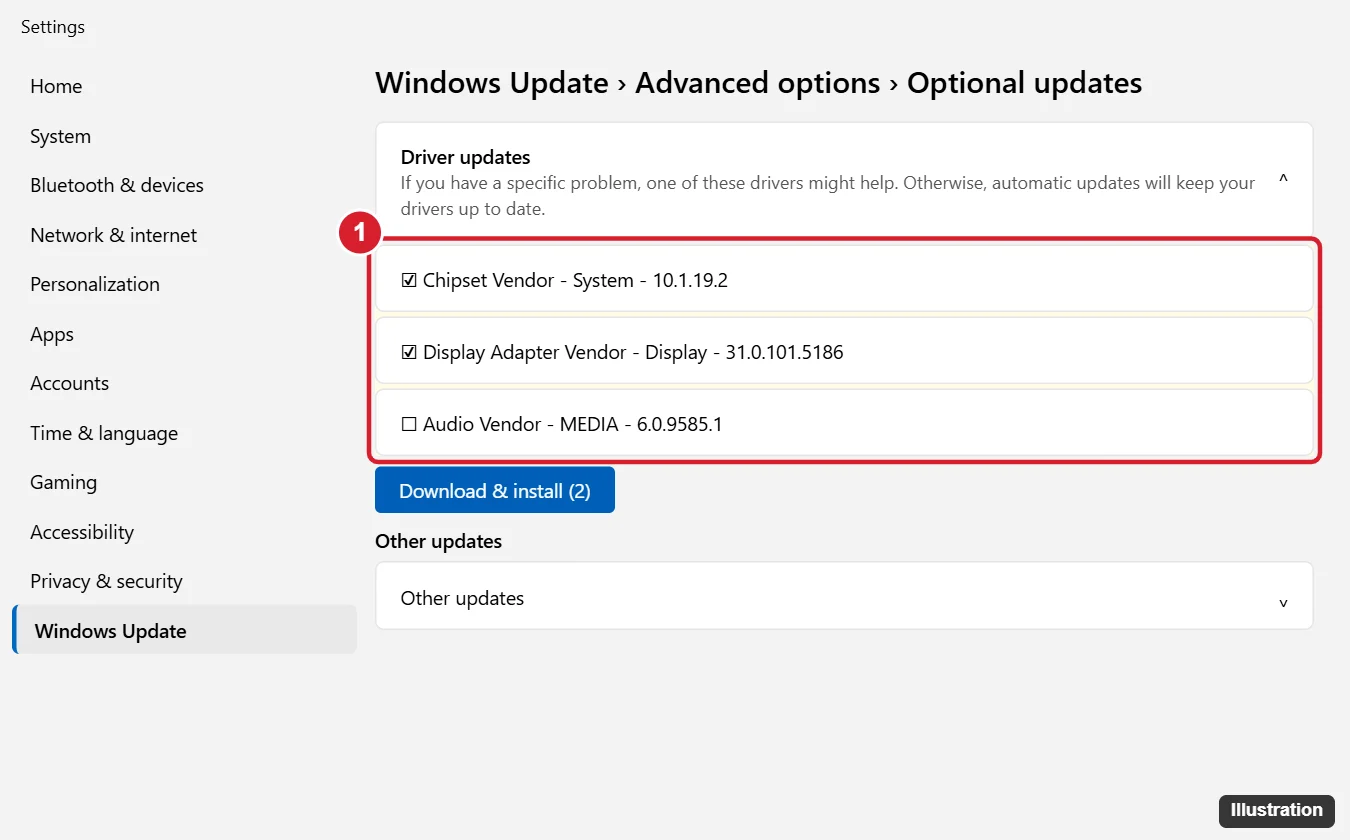
Method 1: Windows Update and Optional Updates
- Press Windows + I to open Settings and click Windows Update.
- Click Check for updates. Recommended drivers download with other updates.
- Click Advanced options, then Optional updates under Additional options.
- Expand Driver updates. If nothing is listed, there are no optional drivers for your PC right now.
- Check the drivers you want and click Download & install. Restart if asked.
Microsoft’s advice is to install optional drivers only if you have a specific problem with that device, since your current driver is usually fine.
Method 2: Device Manager
- Right-click Start and choose Device Manager.
- Expand a category, such as Display adapters or Network adapters.
- Right-click the device and choose Update driver.
- Click Search automatically for drivers. Windows checks the drivers already on your PC. If it says the best driver is installed, you can click Search for updated drivers on Windows Update, which opens Windows Update.
- If you downloaded a driver from the manufacturer, choose Browse my computer for drivers and point to the extracted folder.
A yellow triangle next to a device means it has a driver problem or no driver at all; start there.
Method 3: Manufacturer Tools and Websites
For graphics cards and many laptops, the newest drivers come from the manufacturer first.
- Graphics: NVIDIA, AMD and Intel each offer an app or a driver download page that detects your GPU. Gamers usually get game-ready drivers this way long before Windows Update.
- PC makers: Dell, HP, Lenovo, ASUS, Acer and others have support apps that check for BIOS, chipset, audio and touchpad updates for your exact model. You can also enter your serial number on their support site.
- Peripherals: printers, webcams and gaming mice often need the maker’s software for full features.
Download drivers only from the official manufacturer or Windows Update. Skip third-party “driver updater” utilities, which often bundle unwanted software or install the wrong drivers.
Check Which Driver Version You Have
- In Device Manager, right-click the device and choose Properties.
- Open the Driver tab to see the Driver Date, Driver Version and provider.
For a full list, open Terminal or Command Prompt and run driverquery /v, or in PowerShell run Get-CimInstance Win32_PnPSignedDriver | Select DeviceName, DriverVersion, DriverDate.
To see what Windows Update has installed, go to Settings > Windows Update > Update history and expand Driver updates.
Roll Back a Driver That Causes Problems
- Open Device Manager, right-click the device, and choose Properties.
- On the Driver tab, click Roll Back Driver, choose a reason, and click Yes.
If the button is grayed out, no previous driver is stored. Download the older version from the manufacturer instead, or uninstall the device and restart so Windows reinstalls a basic driver.
Stop Windows From Updating a Driver
- After rolling back, Windows Update may reinstall the same driver. Microsoft’s Show or hide updates troubleshooter can hide a specific driver update, where it’s still available.
- On Windows 11 Pro, Group Policy has Do not include drivers with Windows Updates under Computer Configuration > Administrative Templates > Windows Components > Windows Update, which blocks all driver updates, so use it with care.
How Often Should You Check?
Windows Update handles most drivers on its own. Check Optional updates if a device misbehaves, and update graphics drivers when a new game or app needs them. Update chipset and BIOS/UEFI from your PC maker when they list security or stability fixes, following their instructions carefully.
Related: How to Set Up a New Dell Laptop With Windows 11.
Frequently Asked Questions
Why is Optional updates empty?
Your drivers are current, or Microsoft has none to offer for your hardware. Check the manufacturer’s site for newer versions.
Should I install every optional driver?
No. Install one only if it fixes a problem you have or the manufacturer recommends it.
Does Windows 11 update drivers automatically?
Yes, for many devices, as part of regular Windows Update. Related guide: how to check for Windows 10 updates.
Summary
- Settings > Windows Update > Advanced options > Optional updates > Driver updates.
- Use Device Manager > Update driver for a single device.
- Get graphics and model-specific drivers from the manufacturer.
- Check the Driver tab for versions, and use Roll Back Driver if something breaks.

Kermit Matthews is a freelance writer based in Philadelphia, Pennsylvania with more than a decade of experience writing technology guides. He has a Bachelor’s and Master’s degree in Computer Science and has spent much of his professional career in IT management.
He specializes in writing content about iPhones, Android devices, Microsoft Office, and many other popular applications and devices.