Green check marks on your desktop icons in Windows 10 (and Windows 11) aren’t a virus or an error. They’re sync status icons from OneDrive, which means your Desktop folder is being backed up to the cloud. A solid green circle with a white check means the file is always kept on this PC; a white circle with a green outline means it’s available offline because you opened it. You can remove the check marks by stopping OneDrive from backing up the Desktop, but it’s worth knowing what you’d give up first. This guide explains the options.
Quick Answer
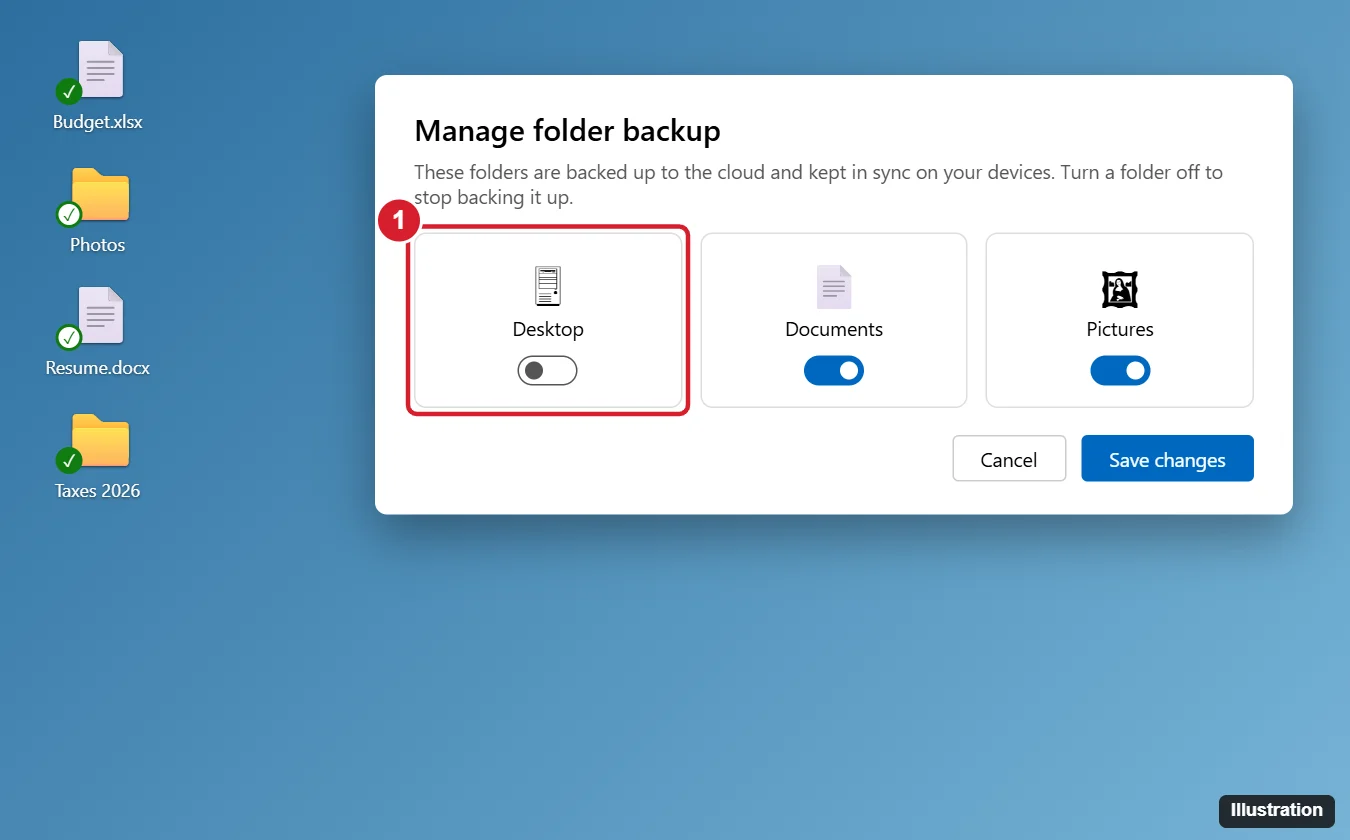
Click the OneDrive cloud icon in the taskbar, click the gear icon > Settings, go to Sync and back up > Manage back up, and turn off Desktop. Click Save changes. The check marks disappear because the Desktop is no longer synced.
What the Green Check Marks Mean
- Solid green circle with a white check: “Always keep on this device.” The file is on your PC and in the cloud.
- White circle with a green check: “Locally available.” You opened a cloud-only file, so it was downloaded. OneDrive may free up the space later.
- Blue cloud: online-only; it downloads when you open it.
- Two blue arrows: syncing is in progress.
- Red circle with an X: a sync problem.
Other cloud apps, such as Dropbox or Google Drive, use similar badges for folders they sync. If the check marks are on files outside your OneDrive folder, check those apps’ settings instead.
Method 1: Stop Backing Up the Desktop (Removes the Check Marks)
- Click the OneDrive icon (white or blue cloud) in the notification area. Click ^ if it’s hidden.
- Click the gear icon and choose Settings.
- Go to Sync and back up and click Manage back up. (In older versions, open the Backup tab and click Manage backup.)
- Turn off Desktop and click Save changes, then Stop backup to confirm.
Important: after you stop backup, new files go to a local Desktop folder, and files you already had may stay in OneDrive rather than on your local Desktop. If your desktop looks empty, open File Explorer > OneDrive > Desktop and move the files you need back to C:\Users\[you]\Desktop.
Method 2: Unlink or Uninstall OneDrive
- Unlink this PC: OneDrive Settings > Account > Unlink this PC. Syncing stops for all folders, and check marks disappear. Files already on your PC stay; online-only files won’t be available.
- Uninstall: Settings > Apps > find Microsoft OneDrive > Uninstall. Move any online-only files to your PC first by right-clicking the OneDrive folder and choosing Always keep on this device.
Method 3: Keep Syncing but Reduce the Icons
There isn’t a supported setting to hide OneDrive’s status icons while keeping sync on. Registry tweaks that remove overlay icons (ShellIconOverlayIdentifiers) affect every app that uses overlays, may be undone by updates, and aren’t recommended. If the icons are the only thing bothering you, you can use fewer desktop icons: right-click the desktop > View > uncheck Show desktop icons, or move files into a single folder.
Should You Remove Them?
OneDrive backup protects your desktop files if your PC is lost, stolen or fails. If you turn it off, make sure you have another backup, such as File History or an external drive. If you keep it, the check marks are a quick way to confirm your files are safe.
Frequently Asked Questions
Why did green check marks suddenly appear?
Windows or a OneDrive update may have turned on folder backup, or you accepted a prompt to back up your folders. Many new PCs turn it on during setup.
Will turning off backup delete my files?
No, but files may stay in the OneDrive folder instead of the local Desktop. Check both places before deleting anything.
Do these steps work on Windows 11?
Yes. The OneDrive settings are the same on Windows 11.
How do I free up space without removing check marks?
Right-click a file or folder and choose Free up space. It becomes online-only (blue cloud) and is downloaded again when you open it.
Summary
- Open OneDrive Settings from the taskbar cloud icon.
- Go to Sync and back up > Manage back up.
- Turn off Desktop and save changes.
- Move any files you need from OneDrive > Desktop back to your local Desktop.

Kermit Matthews is a freelance writer based in Philadelphia, Pennsylvania with more than a decade of experience writing technology guides. He has a Bachelor’s and Master’s degree in Computer Science and has spent much of his professional career in IT management.
He specializes in writing content about iPhones, Android devices, Microsoft Office, and many other popular applications and devices.