OneDrive is built into Windows 11 and often backs up your Desktop, Documents, and Pictures folders automatically. That’s convenient until you want your files stored only on your PC, or you’re running out of OneDrive space. Moving files out of OneDrive and onto your computer is safe if you do it in the right order; deleting files from the OneDrive folder the wrong way can delete them from the cloud too. This guide explains the options.
Quick Answer
First make sure the files are downloaded: select them in the OneDrive folder, right-click, and choose Always keep on this device. Then cut and paste (or drag) them to a folder outside OneDrive, such as C:\Users\YourName\LocalFiles. To stop OneDrive from backing up Desktop, Documents, and Pictures, open OneDrive settings > Sync and backup > Manage back up and turn those folders off.
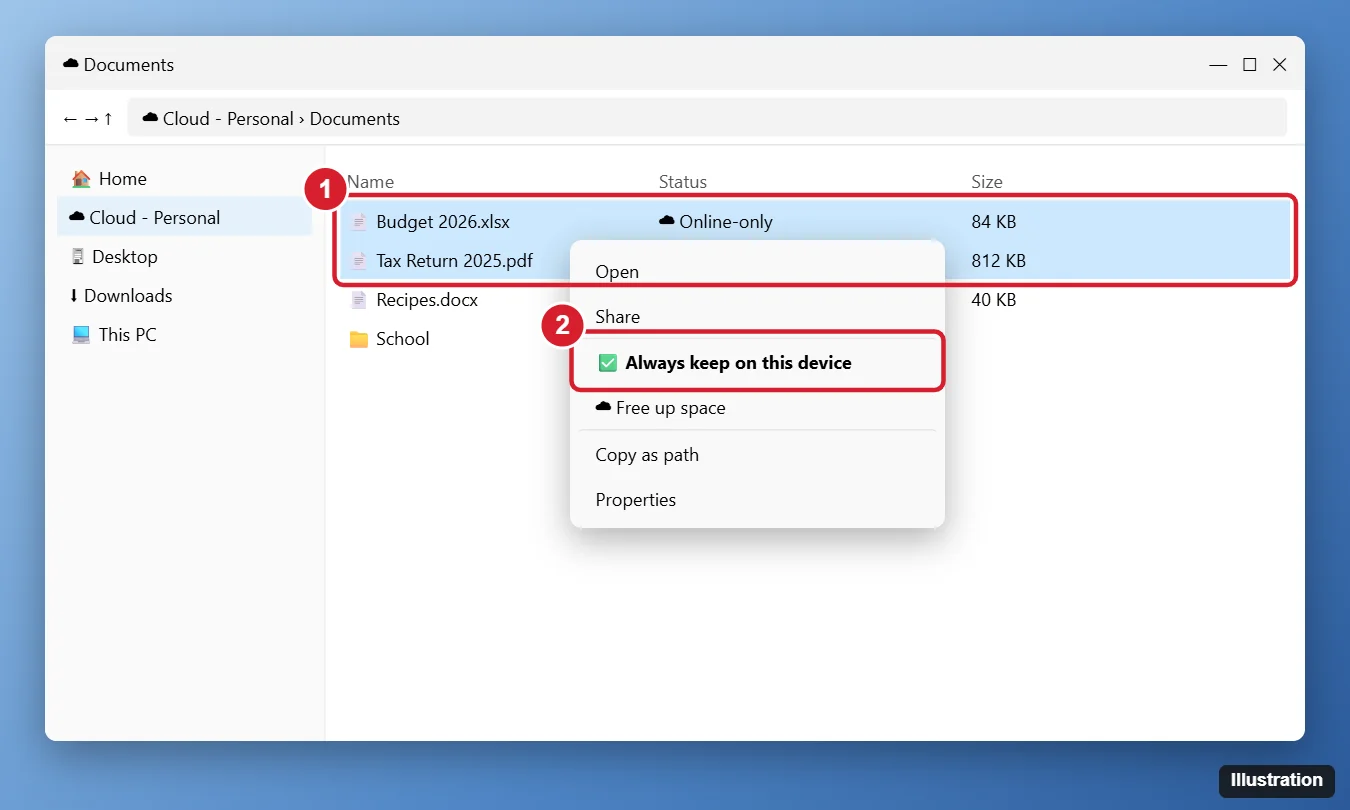
Understand the Status Icons
- Cloud icon: online-only; the file isn’t on your PC until you open it.
- Green check (outline): downloaded, but may be freed up later.
- Solid green check: always kept on this device.
Step 1: Download Everything You Want to Keep
- Open File Explorer and click OneDrive in the left pane.
- Select the files or folders (press Ctrl + A for everything).
- Right-click and choose Always keep on this device.
- Wait until the icons show solid green checks. Large libraries can take a while.
Step 2: Move Files Out of OneDrive
- Create a folder outside OneDrive, for example in C:\Users\YourName or on another drive.
- In the OneDrive folder, select the files, press Ctrl + X (cut), open your new folder, and press Ctrl + V (paste).
Moving files out of the OneDrive folder removes them from OneDrive in the cloud (they go to the OneDrive recycle bin) but keeps them on your PC. If you want to keep a copy in OneDrive too, copy (Ctrl + C) instead of cut.
Stop Backing Up Desktop, Documents, and Pictures
- Click the OneDrive cloud icon in the taskbar, then the gear icon, and choose Settings.
- Go to Sync and backup > Manage back up.
- Turn off the folders you don’t want backed up and confirm Stop backup.
After you stop backup, new files save to your local folder, but existing files may stay in OneDrive. The dialog offers options for existing files, and OneDrive may leave a shortcut to “Where are my files.” If files appear missing, check the OneDrive folder and move them back to your local Desktop or Documents folder.
Other Options
- Download from the web: Go to onedrive.com, select files, and click Download to get a ZIP file.
- Turn off Files On-Demand: In OneDrive Settings > Sync and backup > Advanced settings, choose Download all files so everything stays on your PC.
- Unlink this PC: In OneDrive Settings > Account > Unlink this PC. Files already downloaded stay in the OneDrive folder on your PC; online-only files won’t be available until you download them from onedrive.com.
Avoid These Mistakes
- Don’t delete files from the OneDrive folder expecting them to stay in the cloud; deletions sync.
- Don’t move online-only files without downloading them first.
- Check the OneDrive recycle bin at onedrive.com if something disappears; deleted files are kept for a limited time.
Summary
- Choose Always keep on this device to download files.
- Cut and paste them to a folder outside OneDrive.
- Turn off folder backup in OneDrive Settings > Sync and backup > Manage back up.
- Use onedrive.com to download or recover files if needed.

Kermit Matthews is a freelance writer based in Philadelphia, Pennsylvania with more than a decade of experience writing technology guides. He has a Bachelor’s and Master’s degree in Computer Science and has spent much of his professional career in IT management.
He specializes in writing content about iPhones, Android devices, Microsoft Office, and many other popular applications and devices.