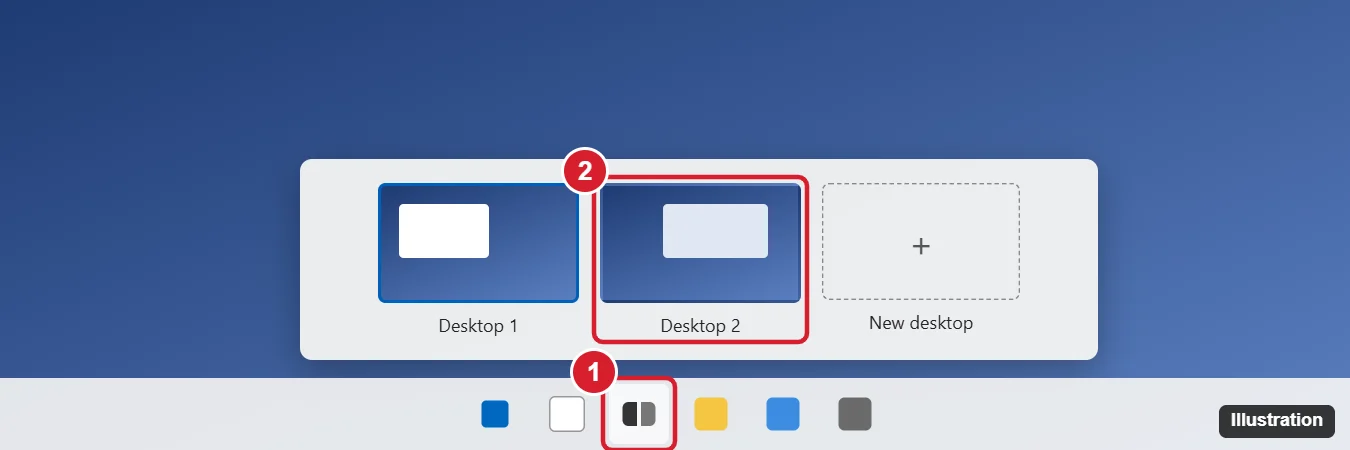
The keyboard shortcut to open a new desktop in Windows 11 is Windows + Ctrl + D. Windows creates a new virtual desktop and switches to it instantly. Press Windows + Ctrl + Left arrow or Right arrow to switch between desktops, and Windows + Ctrl + F4 to close the current one. To see all desktops, press Windows + Tab to open Task View, where you can also click New desktop.
This guide covers every virtual desktop shortcut, how to rename desktops and give them different wallpapers, move windows between them, and use touchpad gestures.
Virtual desktop shortcuts
| Shortcut | Action |
|---|---|
| Windows + Ctrl + D | Create a new desktop and switch to it |
| Windows + Ctrl + Left / Right | Switch to the previous or next desktop |
| Windows + Ctrl + F4 | Close the current desktop (its windows move to the next desktop) |
| Windows + Tab | Open Task View with all windows and desktops |
Create a desktop with Task View
- Press Windows + Tab, or click the Task View button on the taskbar (or hover over it to see your desktops).
- Click New desktop (the plus tile).
- Click the new desktop to switch to it.
Rename a desktop
In Task View, right-click a desktop thumbnail and choose Rename (or click its name), type a name like Work or School, and press Enter.
Give each desktop its own wallpaper
In Task View, right-click a desktop and choose Choose background, then pick an image. Different wallpapers make it easy to see which desktop you’re on.
Move windows between desktops
- In Task View, drag a window thumbnail onto another desktop.
- Or right-click the window thumbnail and choose Move to > the desktop name.
- Choose Show this window on all desktops or Show windows from this app on all desktops for apps like chat or music you want everywhere.
Reorder desktops
In Task View, drag desktop thumbnails left or right, or right-click and choose Move left or Move right. You can also press Alt + Shift + Left/Right while a desktop thumbnail is focused.
Touchpad gestures
On precision touchpads, swipe left or right with four fingers to switch desktops, and swipe up with three fingers for Task View. Change gestures in Settings > Bluetooth & devices > Touchpad.
Desktop settings
In Settings > System > Multitasking > Desktops, choose whether the taskbar and Alt + Tab show windows from all desktops or only the current one.
Troubleshooting
- Shortcut doesn’t work – another app may use the same shortcut, or your keyboard’s Windows key may be locked (common on gaming keyboards).
- Can’t find a window – it’s probably on another desktop. Press Windows + Tab to see all of them, or set Alt + Tab to show windows from all desktops.
- Task View button missing – turn it on in Settings > Personalization > Taskbar.
Related: Make a new desktop in Windows.
Related: Open a new window in Windows 10.
Frequently asked questions
How many desktops can I create?
There’s no small fixed limit, but using a handful keeps things manageable.
Do desktops stay after restarting?
Yes. Desktops and their names remain, but apps don’t reopen on their original desktops automatically.
Do virtual desktops slow down my PC?
The desktops themselves use very little memory; the apps open on them are what use resources.

Kermit Matthews is a freelance writer based in Philadelphia, Pennsylvania with more than a decade of experience writing technology guides. He has a Bachelor’s and Master’s degree in Computer Science and has spent much of his professional career in IT management.
He specializes in writing content about iPhones, Android devices, Microsoft Office, and many other popular applications and devices.