If you’re looking for your “Ethernet password” on Windows 10, the first thing to know is that a normal wired connection doesn’t have a password. You plug in the cable and you’re online. When Windows or a network does ask for credentials over Ethernet, it’s one of a few specific situations: a workplace network using 802.1X sign-in, a broadband connection that uses PPPoE, or you actually need your router or Wi-Fi password. This guide helps you work out which one you’re dealing with and where to find it.
Quick Answer
Home Ethernet connections don’t use a password. If you’re asked to sign in on a wired network at work or school, use your organization account (check Ethernet Properties > Authentication to see the method). If your ISP uses PPPoE, the username and password come from your ISP and are usually printed on your welcome letter or stored in your router. Windows doesn’t display a saved PPPoE password.
Which “Ethernet Password” Do You Need?
| Situation | What the password really is | Where to get it |
|---|---|---|
| Plain home or office cable connection | None needed | Just plug in. If it doesn’t connect, troubleshoot the connection (below). |
| Wired sign-in at work, school, or a dorm (802.1X) | Your network or organization account | Your IT department or help desk |
| Broadband that uses PPPoE (some DSL and fiber) | ISP account username and password | Your ISP’s welcome documents, online account, or router settings |
| Changing router settings | Router admin password | Sticker on the router, or your own custom password |
| Connecting another device wirelessly | Wi-Fi password | See “Find your Wi-Fi password” below |
Check for 802.1X (Work or School Networks)
- Press Windows + R, type ncpa.cpl, and press Enter.
- Right-click Ethernet and choose Properties.
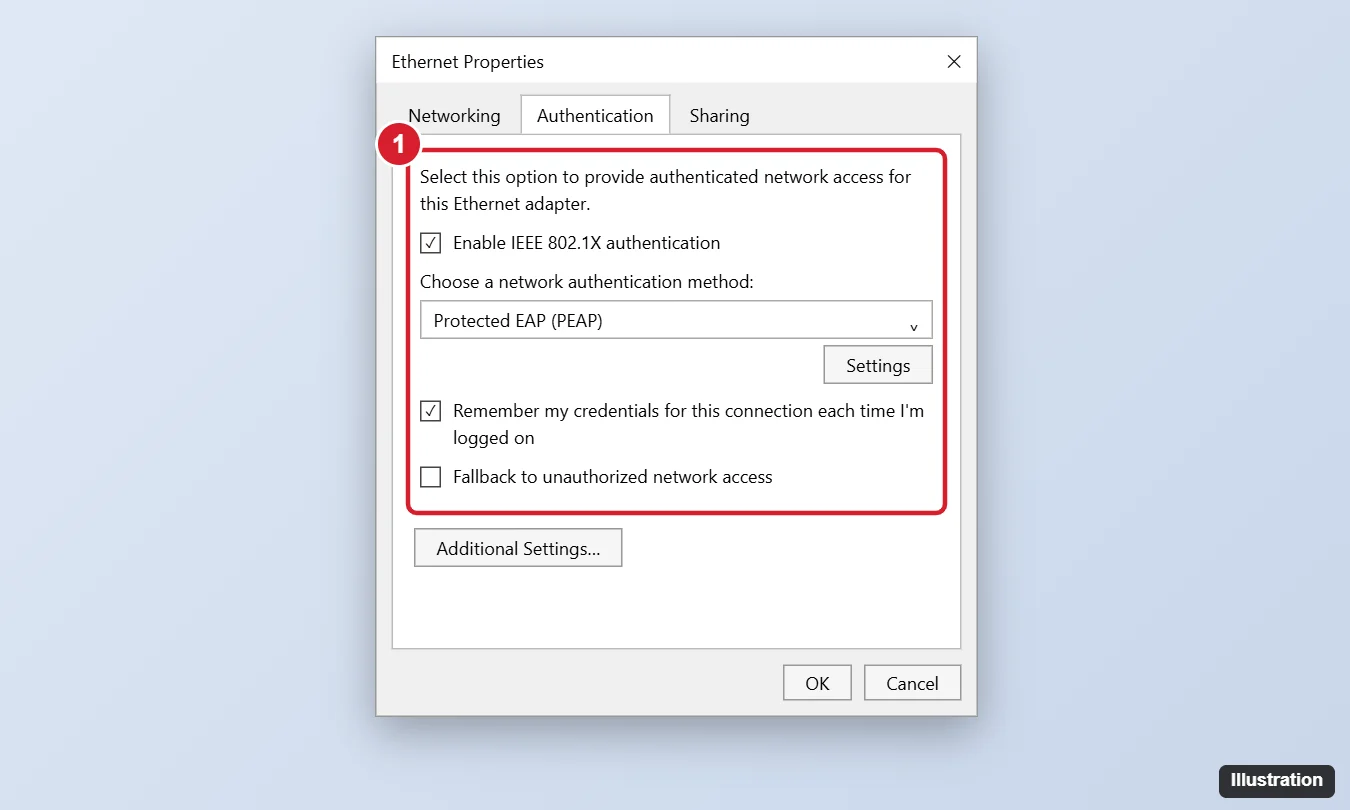
- Click the Authentication tab. If Enable IEEE 802.1X authentication is checked, the network requires credentials.
The Authentication tab only appears when the Wired AutoConfig service is running (open services.msc to check). These credentials are usually your organization username and password; Windows doesn’t show saved passwords here. If sign-in keeps failing, ask IT; they may need to register your device.
PPPoE Broadband Connections
Some ISPs require a PPPoE login. It’s usually entered in the router, not in Windows. If you set it up directly in Windows (Settings > Network & Internet > Dial-up > Set up a new connection > Broadband (PPPoE)), Windows stores the password but won’t reveal it.
- Check your ISP’s welcome email, letter, or online account.
- Log in to your router (commonly at 192.168.0.1 or 192.168.1.1); the PPPoE username is shown in the WAN or Internet settings. Most routers hide the password, but some let you view it.
- Call your ISP to reset it if you can’t find it.
Find Your Wi-Fi Password on Windows 10
If what you really need is the Wi-Fi password (for example, to connect a phone), a Windows PC that has connected to that network can show it:
- Open Command Prompt (search for cmd).
- List saved networks:
netsh wlan show profiles - Show the password for one (replace the name):
netsh wlan show profile name="HomeNetwork" key=clear - Look for Key Content under Security settings.
Or, when connected to that Wi-Fi: Control Panel > Network and Sharing Center, click the Wi-Fi name, then Wireless Properties > Security, and check Show characters.
Ethernet Not Connecting? Try These First
- Check the cable is firmly seated at both ends and that the port lights blink.
- Try a different cable or router port.
- Open Settings > Network & Internet > Status and run the Network troubleshooter.
- Restart the PC and router.
- Update the network adapter driver in Device Manager > Network adapters.
- As a last resort, use Network reset at the bottom of the Status page.
Frequently Asked Questions
Why does Windows ask for a username and password on Ethernet?
The network uses 802.1X authentication, common in offices, universities, and some apartment buildings. Use the credentials the network owner gave you.
Can someone use my Ethernet without a password?
Anyone who can physically plug into your router or wall port can connect. Keep your router in a secure place and use a strong router admin password.
Is the router password the same as the Wi-Fi password?
No. The admin password protects the router’s settings page. The Wi-Fi password lets devices join the wireless network.
Summary
- Home Ethernet doesn’t need a password.
- Wired sign-in at work or school uses 802.1X; get credentials from IT.
- PPPoE credentials come from your ISP or router.
- Use netsh wlan show profile … key=clear if you actually need the Wi-Fi password.

Kermit Matthews is a freelance writer based in Philadelphia, Pennsylvania with more than a decade of experience writing technology guides. He has a Bachelor’s and Master’s degree in Computer Science and has spent much of his professional career in IT management.
He specializes in writing content about iPhones, Android devices, Microsoft Office, and many other popular applications and devices.