Google Play services usually updates itself automatically in the background. To update it manually, open Settings > Apps > See all apps (or App info), tap Google Play services, scroll down, and tap App details under Store. The Play Store opens to the Google Play services page; tap Update if it’s offered. If you only see Deactivate or Open, you already have the latest version available for your device.
This guide covers checking your version, updating manually, fixing updates that won’t install, the difference between Google Play services and Google Play system updates, and what to do on phones that don’t have Google services.
What Google Play services does
Google Play services is a background app that lets other apps use Google features such as sign-in, location, notifications, maps, backups, and security checks. Many apps won’t work properly if it’s out of date, and you may see messages like “This app won’t run unless you update Google Play services.”
Check your current version
- Open Settings > Apps.
- Tap See all apps and choose Google Play services. If you don’t see it, tap the menu (three dots) and choose Show system.
- Scroll to the bottom to see the version number.
Update Google Play services manually
- On the Google Play services App info page, tap App details (under Store).
- In the Play Store, tap Update if available.
- Wait for the update to install, then restart your phone.
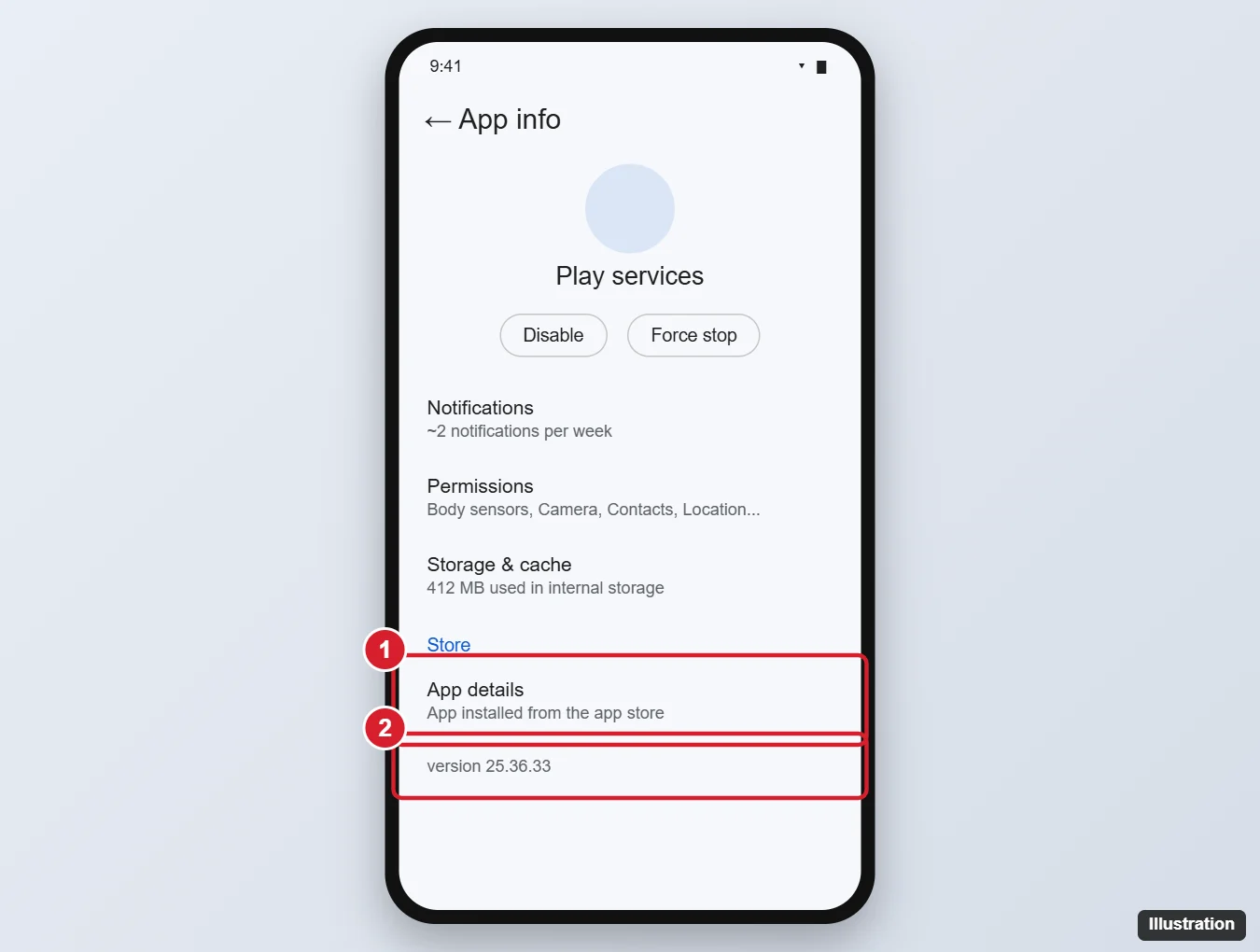
Menu names vary slightly by phone maker and Android version. On Samsung phones, for example, go to Settings > Apps, tap Google Play services, and look for App details in store.
Install a Google Play system update
Google Play system updates are different: they update core Android components. Go to Settings > Security & privacy > System & updates > Google Play system update (or Settings > About phone > Android version > Google Play system update on some phones) and tap Check for update. Restart when asked.
Make sure automatic updates are on
- In the Play Store, tap your profile picture > Settings > Network preferences > Auto-update apps and choose Over any network or Over Wi-Fi only.
- Keep enough free storage (at least a few hundred MB) for updates to install.
Fix Google Play services that won’t update
- Restart your phone and check your internet connection.
- Clear the Play Store cache – Settings > Apps > Google Play Store > Storage & cache > Clear cache.
- Clear Google Play services cache – on the Google Play services app info page, tap Storage & cache > Clear cache. Avoid Clear storage unless troubleshooting further, since it resets some Google settings.
- Uninstall Play Store updates – on the Play Store app info page, tap the menu > Uninstall updates, then open the Play Store so it updates itself again.
- Check date and time – set Automatic date and time in Settings, since wrong time can block Google connections.
- Remove and re-add your Google account in Settings > Passwords & accounts as a last resort.
Phones without Google services
Some phones, such as recent Huawei models and devices sold in certain regions, don’t include Google Play services. Installing it from third-party sites is risky and often doesn’t work; use the phone’s own app store instead. Very old Android versions may also stop receiving Google Play services updates.
Frequently asked questions
Can I uninstall Google Play services?
No. It’s a system app. You can uninstall its updates, but many apps will stop working correctly until it’s updated again.
Is it safe to download Google Play services from other websites?
It’s not recommended. Only update through the Play Store to avoid malware.
Why is Google Play services using so much battery?
It often reflects other apps using location or sync. Check Settings > Battery usage and review app location permissions.

Kermit Matthews is a freelance writer based in Philadelphia, Pennsylvania with more than a decade of experience writing technology guides. He has a Bachelor’s and Master’s degree in Computer Science and has spent much of his professional career in IT management.
He specializes in writing content about iPhones, Android devices, Microsoft Office, and many other popular applications and devices.