Windows 11 redesigned File Explorer with a simplified command bar, rounded menus, tabs, and a shortened right-click menu. If you miss the Windows 10 look, you can bring much of it back: tighter spacing, the full classic context menu, opening to This PC, and a familiar navigation pane. Microsoft has removed the old ribbon toggle, so full restoration requires third-party tools. This guide covers built-in options first.
Quick Answer
In File Explorer, click View > Compact view for Windows 10-style spacing. To restore the full classic right-click menu, run reg add "HKCU\Software\Classes\CLSID\{86ca1aa0-34aa-4e8b-a509-50c905bae2a2}\InprocServer32" /f /ve in Terminal and restart File Explorer. For the old ribbon, you’ll need a trusted third-party customization tool.
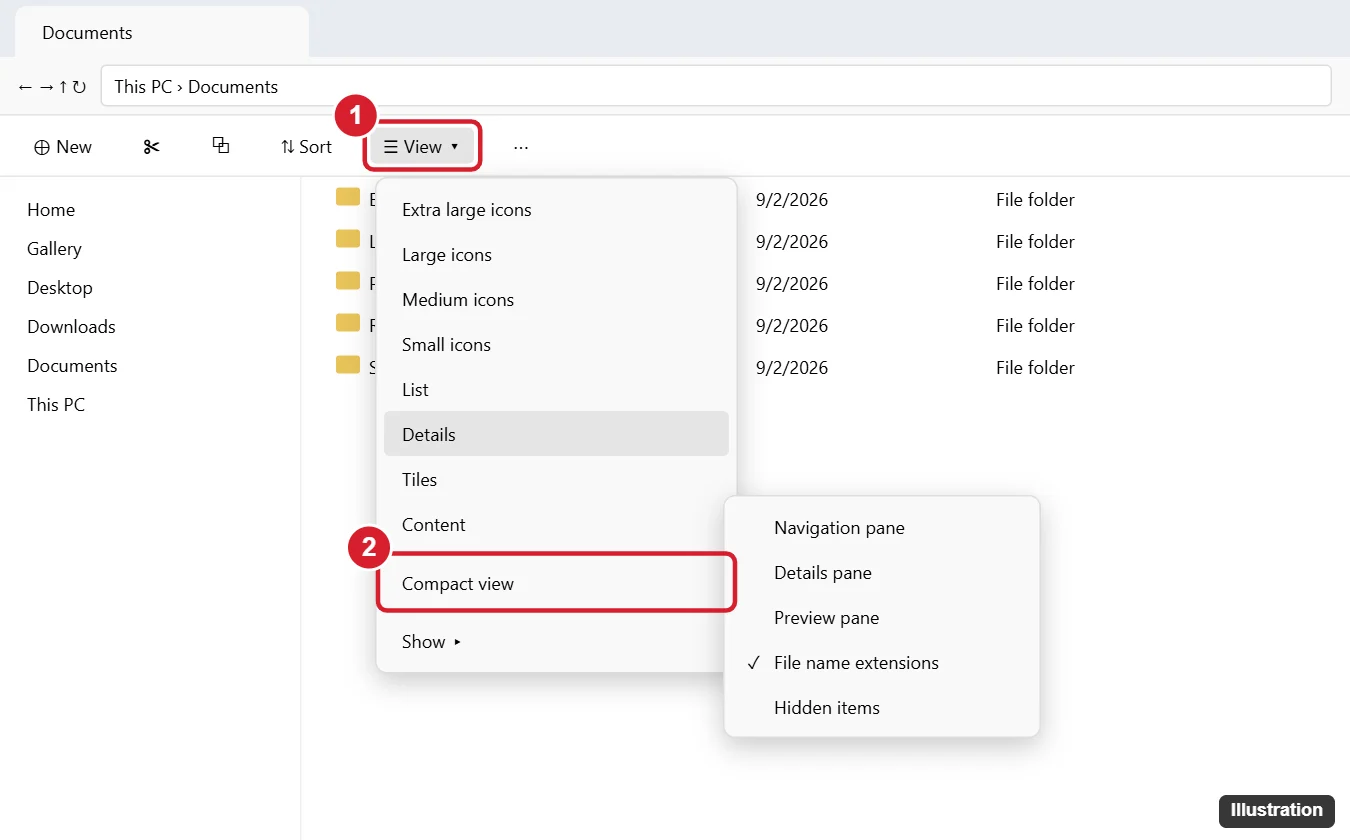
1. Turn On Compact View
- Open File Explorer (Windows + E).
- Click View on the command bar.
- Click Compact view.
This removes the extra padding Windows 11 adds between files and folders.
2. Restore the Classic Right-Click Menu
Windows 11 hides many options under Show more options. You can press Shift + F10 or Shift + right-click to open the classic menu once, or make it the default:
- Right-click Start and open Terminal.
- Run:
reg add "HKCU\Software\Classes\CLSID\{86ca1aa0-34aa-4e8b-a509-50c905bae2a2}\InprocServer32" /f /ve - Restart File Explorer (Task Manager > Windows Explorer > Restart) or sign out and back in.
To undo: reg delete "HKCU\Software\Classes\CLSID\{86ca1aa0-34aa-4e8b-a509-50c905bae2a2}" /f, then restart Explorer. Back up the registry or create a restore point before editing it.
3. Open File Explorer to This PC
- Click the three-dot menu on the command bar and choose Options.
- On the General tab, set Open File Explorer to This PC.
- Click OK.
4. Show All Folders and Libraries in the Navigation Pane
- Open Folder Options (three-dot menu > Options) and go to the View tab.
- Under Navigation pane, check Show all folders and Show libraries, and optionally Expand to open folder.
- Right-click Home or Gallery entries you don’t use to unpin or hide them if your version allows.
5. Show File Extensions and Hidden Items
Click View > Show and check File name extensions and Hidden items, just like the View tab in Windows 10.
6. Use Details View Everywhere
- Open a folder and choose View > Details.
- Open Folder Options > View and click Apply to Folders.
What About the Windows 10 Ribbon?
Earlier Windows 11 builds allowed a registry tweak to bring back the ribbon, but Microsoft removed it in later updates. Third-party apps such as ExplorerPatcher or StartAllBack can restore a Windows 10-style ribbon and Start menu. They modify system components, so download them only from their official sources, understand they may break after Windows updates, and be ready to uninstall if problems appear.
Troubleshooting
- Registry change didn’t work: make sure you restarted Explorer, and that the command created a blank (Default) value.
- Options reset after an update: major Windows updates can revert tweaks; reapply them.
- Explorer crashes with a third-party tool: uninstall the tool from Settings > Apps, or boot into Safe Mode to remove it.
Frequently Asked Questions
Can I turn off File Explorer tabs?
Not with a built-in setting. You can simply ignore them; each window can still have a single tab.
Is the classic context menu tweak safe?
Yes. It’s a per-user registry key and easy to remove, and it doesn’t affect other users.
Summary
- Turn on View > Compact view.
- Use the registry command to restore the classic right-click menu.
- Set File Explorer to open to This PC and show all folders.
- Use a trusted third-party tool only if you need the old ribbon.

Kermit Matthews is a freelance writer based in Philadelphia, Pennsylvania with more than a decade of experience writing technology guides. He has a Bachelor’s and Master’s degree in Computer Science and has spent much of his professional career in IT management.
He specializes in writing content about iPhones, Android devices, Microsoft Office, and many other popular applications and devices.