Factory resetting a Windows 11 laptop reinstalls Windows and returns it to a clean state. It’s the fix for persistent problems and a must before selling or giving a laptop away. Windows 11’s built-in Reset this PC handles it without a USB drive. This guide covers resetting from Settings and from the sign-in screen, choosing between keeping or removing files, cloud versus local reinstall, securely wiping the drive before a sale, and what to do afterward.
Quick Answer
Go to Settings > System > Recovery, click Reset PC next to Reset this PC, choose Keep my files or Remove everything, pick Cloud download or Local reinstall, and click Reset.
Before You Reset
- Back up files to OneDrive, an external drive or another cloud service, even if you plan to keep your files.
- Note your apps and license keys. Desktop apps are removed in both options.
- Find your BitLocker recovery key if the drive is encrypted; it’s usually saved in your Microsoft account. See how to find your BitLocker recovery key.
- Plug in the charger. A reset can take an hour or more.
Method 1: Reset From Settings
- Open Settings > System > Recovery.
- Next to Reset this PC, click Reset PC.
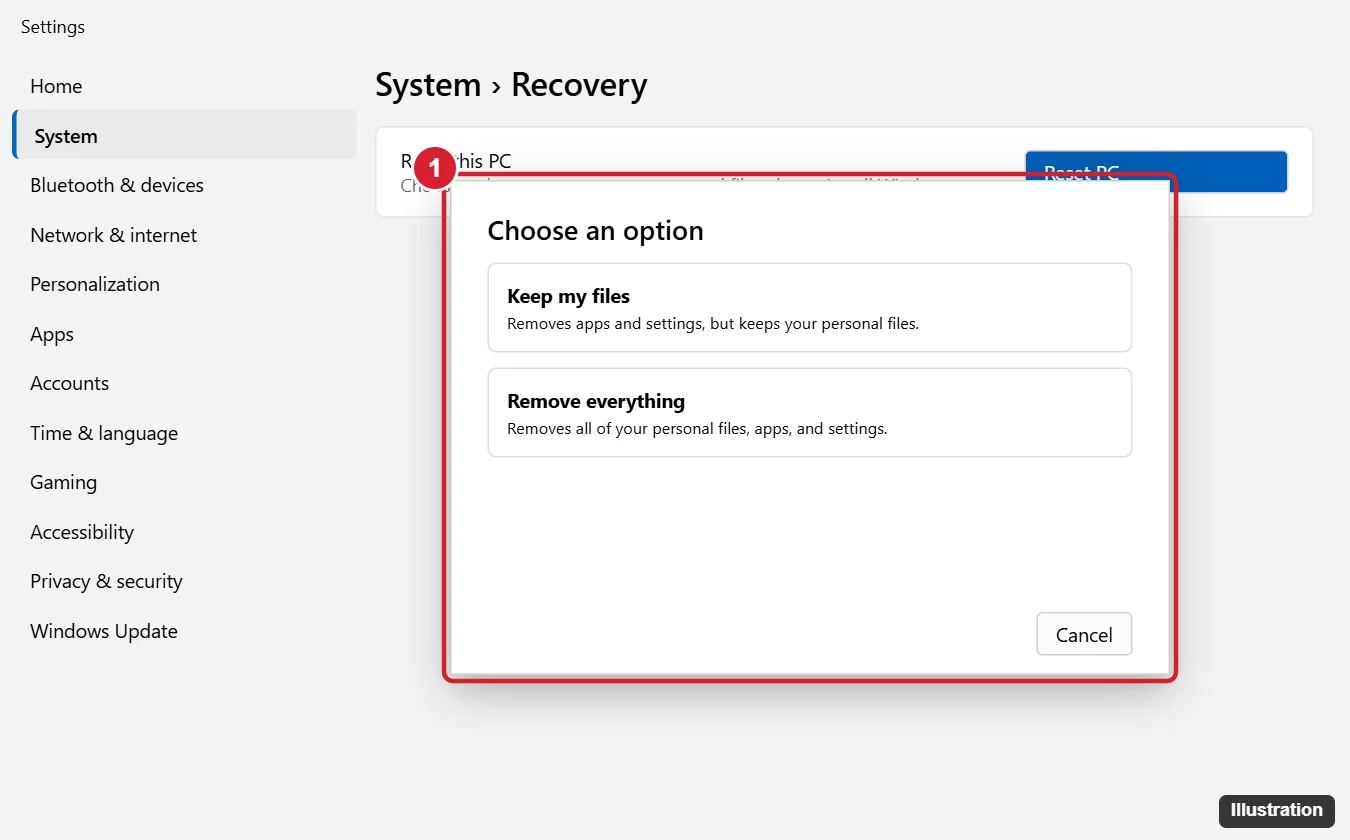
- Choose an option:
- Keep my files: removes apps and settings, keeps personal files.
- Remove everything: removes all files, apps and settings (a true factory reset).
- Choose how to reinstall:
- Cloud download: downloads a fresh copy of Windows (several GB). More reliable if system files are damaged.
- Local reinstall: rebuilds Windows from files already on the laptop. No download needed.
- Review Additional settings (see below), click Next, then Reset.
Selling or Giving It Away? Clean the Drive
When you choose Remove everything, click Change settings under Additional settings and turn on Clean data. This overwrites the drive so files are much harder to recover. It adds time, sometimes hours, but protects your data. Turn on Delete files from all drives if the laptop has more than one drive.
Also sign out of your Microsoft account and remove the laptop from your account’s device list online, and turn off Find my device.
Method 2: Reset From the Sign-In Screen or Recovery
If Windows won’t start properly or you can’t sign in:
- On the sign-in screen, hold Shift, click the power icon, and choose Restart. (Windows also opens recovery automatically after repeated failed starts.)
- Choose Troubleshoot > Reset this PC.
- Pick Keep my files or Remove everything and follow the prompts. Keep my files may ask you to sign in with an administrator account.
Method 3: Manufacturer Recovery or USB
- Many laptops have a maker recovery tool reachable with a key at startup (often F11, F12 or a dedicated recovery button). Check your laptop’s support site for the exact key.
- If Reset this PC fails, create Windows 11 installation media on another PC with Microsoft’s Media Creation Tool and do a clean install.
After the Reset
- Complete setup and sign in.
- Run Windows Update until no more updates appear, including optional driver updates.
- Reinstall apps and restore your files.
- If you chose Keep my files, look for a list of removed apps on your desktop.
Troubleshooting
| Problem | Fix |
|---|---|
| “There was a problem resetting your PC” | Try Cloud download, run DISM and SFC first, or use installation media |
| Stuck at a percentage | Wait a few hours; Clean data takes long. Only restart if there’s no disk activity for a long time |
| BitLocker recovery screen | Enter the recovery key from your Microsoft account |
| Reset is missing or disabled | Work or school laptops may block it; contact IT |
Related: Wipe the hard drive and reinstall Windows.
Frequently Asked Questions
Will I lose my Windows license?
No. Windows reactivates automatically with the digital license tied to the laptop.
Does a reset remove viruses?
Remove everything removes almost all malware. Keep my files usually does too, but back up only files you trust.
How is this different from Windows 10?
The steps are nearly the same; Windows 10 uses Settings > Update & Security > Recovery. See how to factory reset Windows 10.
What does “hard reset” mean on a Windows 11 PC?
People use it two ways. A forced restart means holding the power button for about 10 seconds until the PC turns off, then turning it back on; use it only when Windows is frozen. A factory reset is the full Reset this PC process described above, which reinstalls Windows.
Is resetting the same as reinstalling Windows 11?
Reset this PC reinstalls Windows from the PC’s own files or a cloud download, without a USB drive. A clean install from a USB drive wipes the whole disk and lets you repartition it. For that route, see how to reinstall Windows 11.
How long does a reset take?
Usually 30 minutes to 2 hours. Turning on Clean data adds several hours. Keep a laptop plugged in.
Summary
- Back up files and find your BitLocker key.
- Settings > System > Recovery > Reset PC.
- Choose Remove everything and Clean data before selling.
- Run Windows Update and reinstall apps afterward.

Kermit Matthews is a freelance writer based in Philadelphia, Pennsylvania with more than a decade of experience writing technology guides. He has a Bachelor’s and Master’s degree in Computer Science and has spent much of his professional career in IT management.
He specializes in writing content about iPhones, Android devices, Microsoft Office, and many other popular applications and devices.