A factory reset erases everything on your Google Pixel and returns it to how it was out of the box. It’s the right move before selling or trading in a phone, or when problems won’t go away. This guide covers resetting from Settings, from recovery mode when you can’t unlock the phone, and remotely with Find My Device, plus what to back up first and how Factory Reset Protection works afterward.
Quick Answer
Go to Settings > System > Reset options > Erase all data (factory reset), tap Erase all data, enter your PIN, and confirm. If you can’t unlock the phone, use recovery mode (Method 2).
Before You Reset
- Back up: Settings > System > Backup (Google One backup) saves apps, settings, call history and messages. Make sure Google Photos backup has finished.
- Know your Google account password. After a reset, the phone asks for the Google account that was on it (see Factory Reset Protection below).
- Charge the phone to at least 50%.
- Selling it? Remove your Google account in Settings > Passwords & accounts first, and remove the SIM card.
- eSIM: during reset you can choose whether to erase downloaded eSIMs. Keep them if you’re resetting your own phone to keep using it.
Method 1: Reset From Settings
- Open Settings > System > Reset options.
- Tap Erase all data (factory reset).
- Choose whether to also erase eSIMs, then tap Erase all data.
- Enter your PIN, pattern or password and confirm.
The phone restarts and shows the welcome screen when finished.
Method 2: Reset From Recovery Mode
Use this if you forgot your screen lock or the phone won’t start normally.
- Turn the phone off.
- Press and hold Power and Volume Down together until the bootloader (Fastboot Mode) screen appears.
- Press Volume Down until Recovery mode shows, then press Power.
- If you see “No command,” hold Power and press Volume Up once, then release both.
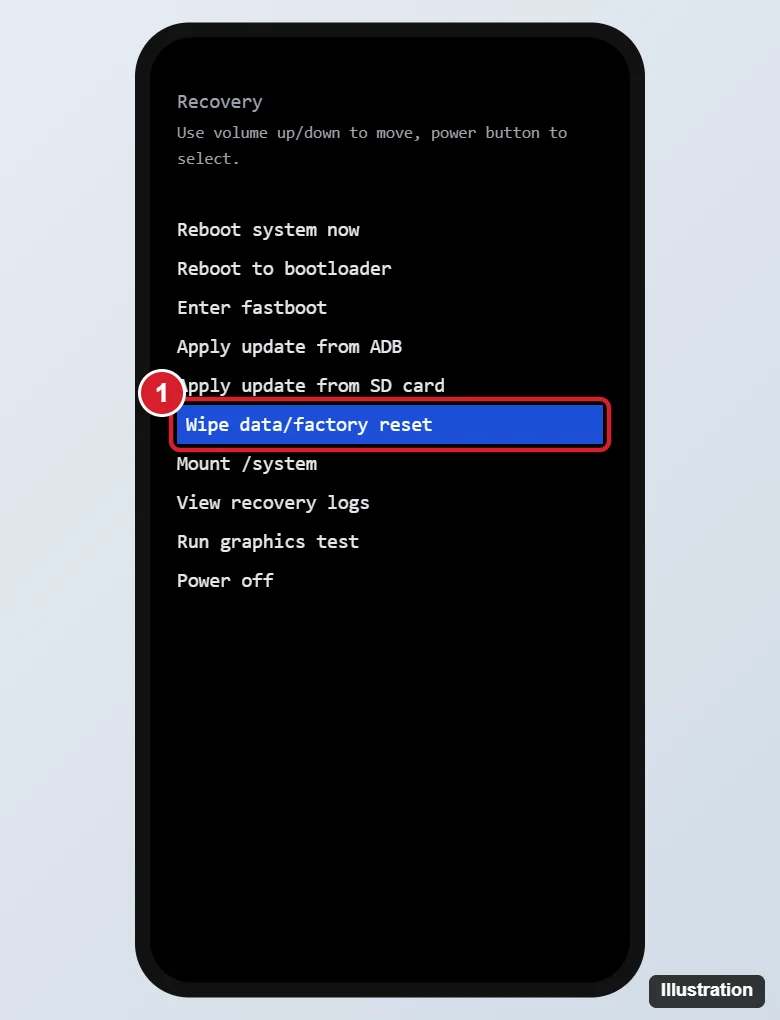
- Use the volume buttons to highlight Wipe data/factory reset and press Power. Confirm with Factory data reset.
- When it finishes, choose Reboot system now.
Method 3: Erase Remotely With Find My Device
If your Pixel is lost or stolen, go to Google’s Find My Device website (or app on another device), sign in, select the phone, and choose Factory reset device. It erases the phone the next time it’s online. You won’t be able to locate it afterward.
Factory Reset Protection (FRP)
After a reset, the setup screen asks you to verify the Google account previously synced to the phone. This protects stolen phones from being reused. To get through it:
- Sign in with that Google account, or unlock with the previous screen lock if prompted.
- Forgot the password? Use Google’s account recovery page from another device, then wait for the change to sync (it can take up to 24 hours before the new password works on the phone).
- Bought a used Pixel that’s locked? Ask the seller to remove the phone from their account. Google support may help with proof of purchase.
Avoid “FRP bypass” tools and services; they’re unreliable, can install malware, and are often used with stolen phones.
After the Reset
- Follow setup, connect to Wi-Fi, and sign in with your Google account.
- Choose to restore from your backup, or set up as new.
- Reinstall apps and check that Photos, contacts and messages came back.
Try These Before a Full Reset
- Restart the phone.
- Reset just network settings: Settings > System > Reset options > Reset Wi-Fi, mobile & Bluetooth.
- Reset app preferences in the same menu.
- Boot into safe mode to find a misbehaving app.
Frequently Asked Questions
Does a factory reset remove Android updates?
No. The phone keeps its current Android version.
How long does it take?
Usually a few minutes, plus setup time.
Summary
- Back up and know your Google account password.
- Settings > System > Reset options > Erase all data.
- Use recovery mode if you can’t unlock the phone.
- Sign in with the previous Google account after reset.

Kermit Matthews is a freelance writer based in Philadelphia, Pennsylvania with more than a decade of experience writing technology guides. He has a Bachelor’s and Master’s degree in Computer Science and has spent much of his professional career in IT management.
He specializes in writing content about iPhones, Android devices, Microsoft Office, and many other popular applications and devices.