A Chrome update occasionally breaks something: a website you rely on, an extension, a work tool, or a feature you liked. The natural reaction is to go back to the previous version, but Google doesn’t offer old Chrome downloads, and running an outdated browser is risky. This guide explains the safe options on Windows 10, including the official rollback method for managed PCs, and how to fix most update problems without downgrading at all.
Quick Answer
There’s no “downgrade” button in Chrome. For most people the best fix is to reset Chrome settings, disable the extension causing trouble, or wait for the next update. If you must use an older version, the supported route is Chrome’s rollback policy (for managed or business PCs) or the Extended Stable channel, which updates more slowly. Avoid Chrome installers from third-party websites.
Before You Downgrade: Why It’s Risky
- Security: each Chrome update fixes security holes. An older version exposes you to attacks that are already known.
- Profile compatibility: a newer Chrome may update your profile data in a way an older version can’t read, which can cause crashes or lost settings. Turn on Sync first so bookmarks and passwords are backed up to your Google account.
- Automatic updates: Chrome updates itself again unless updates are blocked by policy.
Step 1: Check Your Version
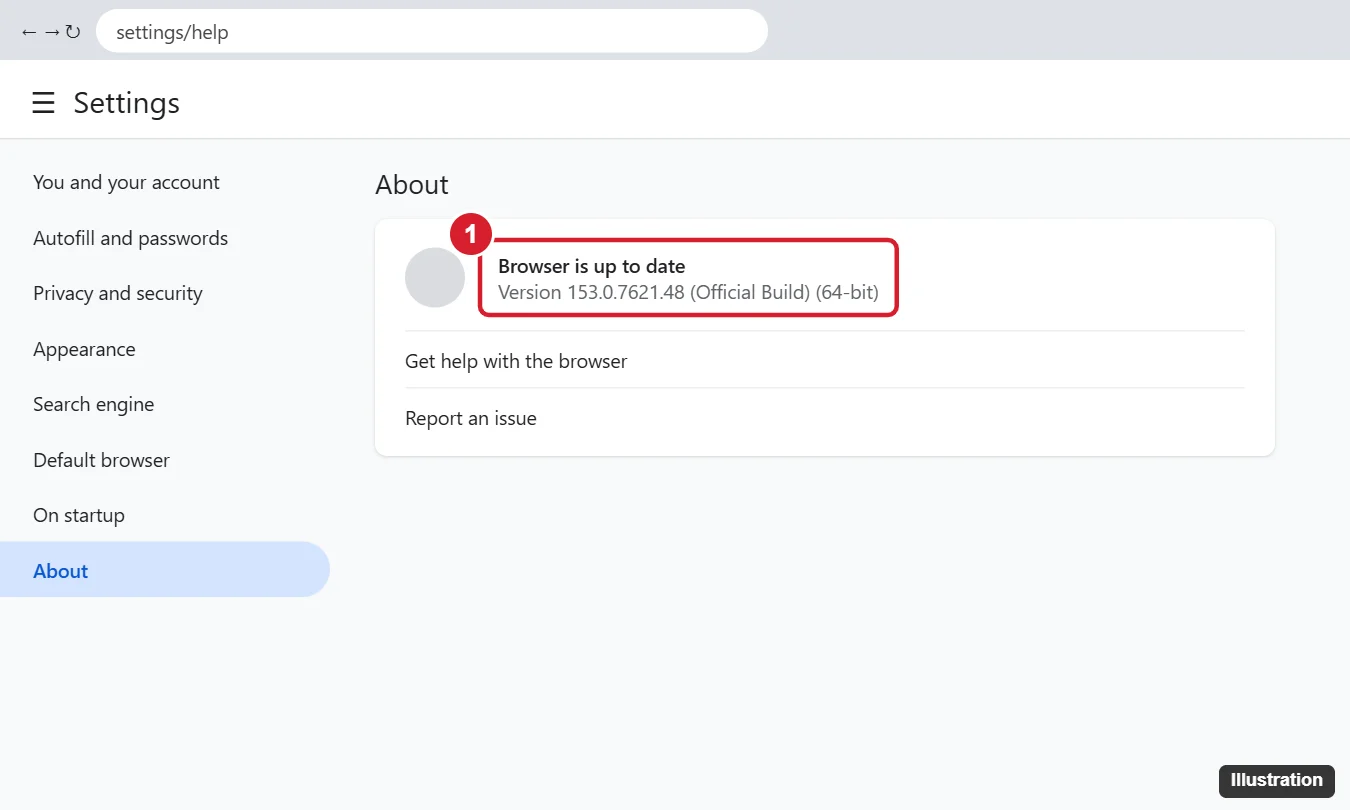
Click the three dots > Help > About Google Chrome, or go to chrome://settings/help. Note the version number for troubleshooting.
Step 2: Try Fixes That Don’t Require Downgrading
- Restart Chrome and the PC after an update.
- Disable extensions: go to chrome://extensions, turn them all off, and turn them back on one at a time to find the one that broke.
- Clear cached files for the problem site (Ctrl + Shift + Delete, cached images and files).
- Reset settings: Settings > Reset settings > Restore settings to their original defaults. This keeps bookmarks and passwords.
- Turn off a changed feature: some new features can be switched off in Settings; search for it in the Settings search box.
- Use another browser temporarily for the one site that’s broken, and report the issue with Help > Report an issue.
Option A: Official Rollback for Managed PCs
Chrome supports rolling back through enterprise policies, which is how IT departments handle a bad update. On Windows 10 Pro or Enterprise:
- Download Google’s Chrome administrative templates (ADMX) and add them to Group Policy (or use your management console).
- Under Google Update > Applications > Google Chrome, set Target version prefix override to the version you want (for example, the previous major version followed by a period).
- Enable Rollback to Target version.
- Run a Chrome update check. Chrome installs the target version.
Google warns that rolling back can cause profile issues; keep Sync on or back up the profile first. Remove the policy once the problem is fixed so Chrome returns to normal updates.
Option B: Extended Stable Channel
Chrome’s Extended Stable channel receives feature updates every 8 weeks instead of every 4, while still getting security fixes. It’s mainly for businesses, but it’s a safer way to slow down changes than freezing an old version. It’s set with the Target channel override policy.
Option C: Portable or Test Versions
Developers who need to test an old version for a website can use Google’s archived Chromium builds or testing tools in a separate folder, not as their everyday browser. Don’t browse the web with them.
What to Avoid
- Downloading “old Chrome” installers from unofficial sites. They’re a common source of malware.
- Permanently disabling Chrome updates by deleting update services or renaming files, which leaves you unprotected.
Frequently Asked Questions
Can I uninstall a Chrome update like a Windows update?
No. Chrome updates replace the previous version completely.
Will downgrading remove my bookmarks?
It can if the profile becomes incompatible. Turn on Sync or export bookmarks (Bookmarks > Bookmark manager > Export bookmarks) first.
How do I stop Chrome from updating?
Only through enterprise policies on managed PCs. For home users, keeping updates on is strongly recommended.
Summary
- Try disabling extensions, clearing cache, and resetting settings first.
- Back up with Sync before any rollback.
- On managed PCs, use the Rollback to Target version policy.
- Never install old Chrome versions from unofficial sites.

Kermit Matthews is a freelance writer based in Philadelphia, Pennsylvania with more than a decade of experience writing technology guides. He has a Bachelor’s and Master’s degree in Computer Science and has spent much of his professional career in IT management.
He specializes in writing content about iPhones, Android devices, Microsoft Office, and many other popular applications and devices.