Outdated or corrupted network drivers can cause slow Wi-Fi, dropped connections, missing networks, or no internet at all. Windows 11 can update them through Device Manager and Windows Update, and you can install the latest version directly from the adapter or PC maker. This guide covers each method, including how to update when you have no internet connection, and how to roll back a bad update.
Quick Answer
Right-click Start and open Device Manager. Expand Network adapters, right-click your Wi-Fi or Ethernet adapter, choose Update driver, then Search automatically for drivers. Also check Settings > Windows Update > Advanced options > Optional updates > Driver updates.
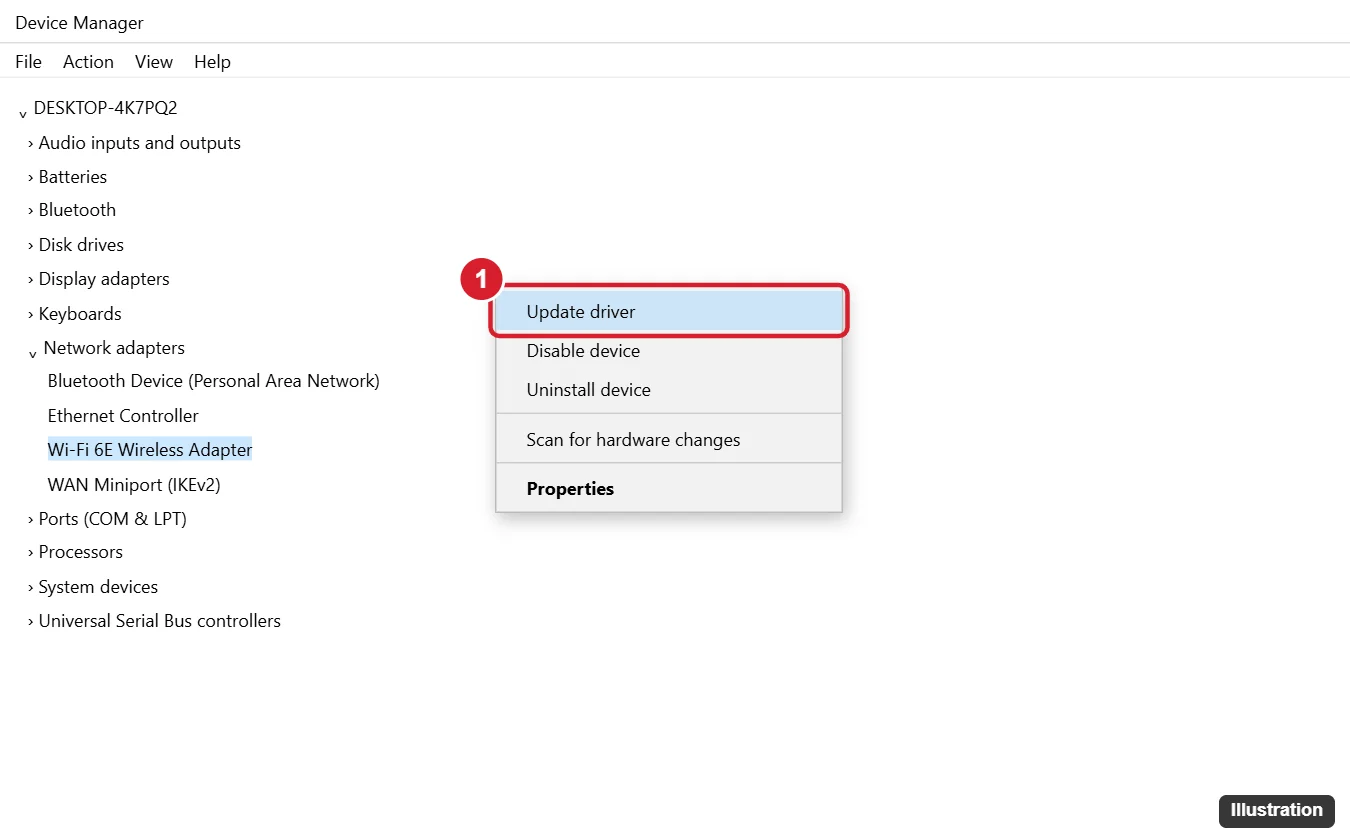
Method 1: Device Manager
- Right-click Start and choose Device Manager.
- Expand Network adapters.
- Right-click your adapter (Wi-Fi adapters usually include “Wireless,” “Wi-Fi,” or “802.11”; wired ones include “Ethernet” or “GbE”).
- Choose Update driver > Search automatically for drivers.
- Restart the PC if prompted.
If it says the best drivers are already installed, that only means Windows’ own catalog has nothing newer. The manufacturer may have a newer version.
Method 2: Windows Update Optional Updates
- Open Settings > Windows Update > Advanced options.
- Click Optional updates and expand Driver updates.
- Check any network drivers listed and click Download & install.
Method 3: Manufacturer’s Website
- Find the adapter name in Device Manager (or your PC or motherboard model).
- Go to your PC maker’s support page (for laptops and prebuilt PCs) or the adapter maker’s driver page.
- Download the Windows 11 driver and run the installer, then restart.
PC makers’ support apps can also find the right drivers automatically.
No Internet? Update Offline
- On another computer or phone, download the correct driver and copy it to a USB drive.
- On your PC, run the installer from the USB drive. If it’s a driver folder instead, open Device Manager, right-click the adapter, choose Update driver > Browse my computer for drivers, and select the folder.
- Alternatively, connect with an Ethernet cable or use USB tethering from your phone to get online temporarily.
Reinstall or Roll Back the Driver
- Reinstall: right-click the adapter > Uninstall device (leave “Attempt to remove the driver” unchecked), then restart. Windows reinstalls the driver automatically.
- Roll back: if problems started after an update, right-click the adapter > Properties > Driver > Roll Back Driver.
- Network reset: Settings > Network & internet > Advanced network settings > Network reset reinstalls all adapters and resets settings.
Frequently Asked Questions
How do I check my current network driver version?
In Device Manager, right-click the adapter > Properties > Driver to see the version and date.
Should I use third-party driver updater apps?
It’s best to avoid them. Windows Update and the manufacturer’s site are safer and free.
My adapter isn’t listed under Network adapters. What now?
Click Action > Scan for hardware changes. If it still doesn’t appear, check the BIOS for a disabled wireless or LAN setting, or look under Other devices for an unknown device needing a driver.
Summary
- Use Device Manager > Network adapters > Update driver.
- Check Windows Update > Optional updates.
- Download the latest driver from your PC or adapter maker.
- Roll back or reinstall if the update causes problems.

Kermit Matthews is a freelance writer based in Philadelphia, Pennsylvania with more than a decade of experience writing technology guides. He has a Bachelor’s and Master’s degree in Computer Science and has spent much of his professional career in IT management.
He specializes in writing content about iPhones, Android devices, Microsoft Office, and many other popular applications and devices.