You can run Windows on a Mac to use apps and games that aren’t available for macOS, but the way you do it depends on your Mac’s processor. Macs with Apple silicon (M1 and later) run the Arm version of Windows 11 in a virtual machine app. Older Intel Macs can install Windows in a separate partition with Apple’s Boot Camp, or run it in a virtual machine. This guide explains how to check which Mac you have, where to download Windows safely, and how to install it both ways.
Quick Answer
Apple silicon Mac: install a virtual machine app such as Parallels Desktop, VMware Fusion or the free UTM, download the Windows 11 Arm ISO from Microsoft, and create a new virtual machine from it. Intel Mac: open Boot Camp Assistant (in Applications > Utilities), choose a Windows 10 ISO, and follow the prompts to partition and install. You’ll need a Windows license to activate.
Step 1: Check Which Mac You Have
Click the Apple menu > About This Mac. If it lists a Chip such as Apple M1, M2, M3 or M4, you have Apple silicon. If it lists a Processor such as Intel Core i5, you have an Intel Mac.
Step 2: Download Windows
- Apple silicon: download the Windows 11 Arm64 ISO from Microsoft’s official Windows 11 download page (look for the Arm64 option). Some virtual machine apps can download it for you.
- Intel: download a Windows 10 (64-bit) ISO from Microsoft’s download page. Boot Camp officially supports Windows 10; Windows 11 isn’t officially supported on Intel Macs through Boot Camp.
Only download Windows from Microsoft to avoid modified or malware-infected copies.
Option A: Virtual Machine (Apple Silicon or Intel)
- Install a virtual machine app. Parallels Desktop is a paid app authorized by Microsoft for Windows 11 on Apple silicon; VMware Fusion is free for personal use; UTM is free and open-source.
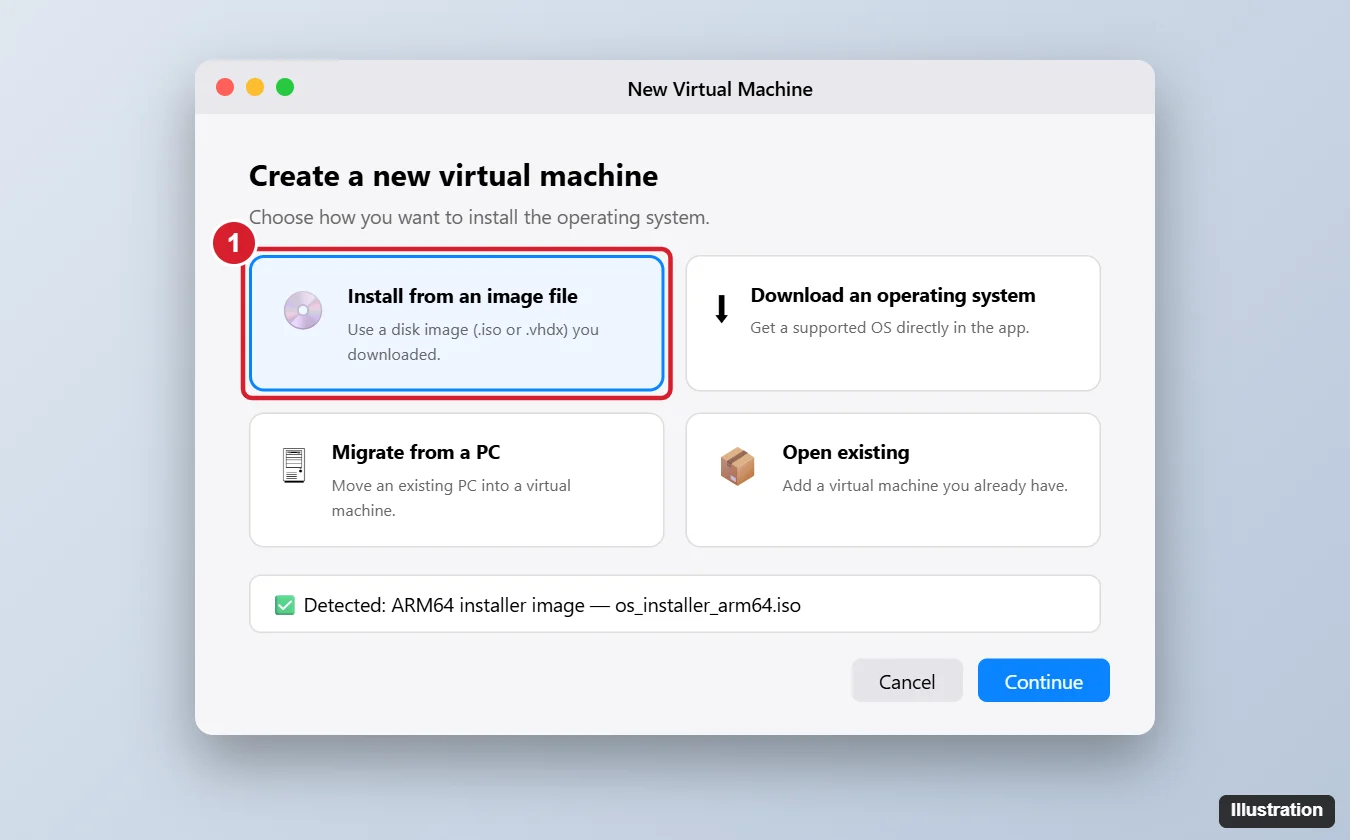
- Create a new virtual machine and choose Install from an image file (or let the app download Windows).
- Select the Windows ISO, choose how much memory, processor cores and disk space to give Windows (at least 4 GB RAM and 64 GB disk), and start the installation.
- Follow Windows setup, then install the app’s guest tools (Parallels Tools, VMware Tools, or UTM’s SPICE guest tools) for better graphics, shared folders and copy-paste.
With a virtual machine, you run Windows and macOS side by side and can switch instantly. Windows on Arm runs most regular Windows apps through built-in emulation, but some games with anti-cheat, older drivers and certain specialized software may not work.
Option B: Boot Camp (Intel Macs Only)
- Back up your Mac with Time Machine.
- Open Boot Camp Assistant from Applications > Utilities.
- Choose the Windows 10 ISO and drag the divider to set the size of the Windows partition (at least 64 GB; 128 GB or more is better).
- Click Install. The Mac restarts into Windows setup. Choose the partition labeled BOOTCAMP if asked.
- After setup, the Boot Camp installer runs to add drivers for the keyboard, trackpad, Wi-Fi and graphics.
To switch operating systems, restart and hold Option to choose macOS or Windows. Boot Camp gives Windows full access to the Mac’s hardware, so it’s best for games on Intel Macs.
Activating Windows
You need a Windows license. You can install and use Windows unactivated for a while, but you’ll see a watermark and some personalization settings are locked. Buy a key from Microsoft or an authorized retailer and enter it in Settings > System > Activation.
Other Options
- Windows 365 or Azure Virtual Desktop: run a Windows PC in the cloud and connect with the Windows App on your Mac (subscription).
- CrossOver: runs some Windows apps on macOS without installing Windows (paid).
Frequently Asked Questions
Can I use Boot Camp on an M1 or newer Mac?
No. Boot Camp is only for Intel Macs. Use a virtual machine instead.
Is running Windows on a Mac free?
The software can be free (VMware Fusion or UTM), but Windows itself requires a license for continued, fully featured use.
How much storage do I need?
Plan on at least 64 GB for Windows plus your apps; 128 GB or more is more comfortable.
Summary
- Check your Mac’s chip in About This Mac.
- Apple silicon: install Windows 11 Arm in a virtual machine app.
- Intel: use Boot Camp Assistant with Windows 10, or a virtual machine.
- Activate Windows with a valid license.

Kermit Matthews is a freelance writer based in Philadelphia, Pennsylvania with more than a decade of experience writing technology guides. He has a Bachelor’s and Master’s degree in Computer Science and has spent much of his professional career in IT management.
He specializes in writing content about iPhones, Android devices, Microsoft Office, and many other popular applications and devices.