To do a clean install of Windows 10, back up your files, create a bootable USB drive with Microsoft’s Media Creation Tool, and boot your PC from it. In Windows Setup, choose Custom: Install Windows only (advanced), delete the partitions on the drive where Windows is installed, select the Unallocated Space, and click Next. Windows installs fresh, with none of your old apps or files.
Important: Windows 10 reached end of support on October 14, 2025. Home users only get security updates through Extended Security Updates (ESU), which Microsoft says ends for consumers on October 12, 2027. If your PC supports Windows 11, consider a clean install of Windows 11 instead. The steps are nearly identical.
Before you start
- Back up everything to an external drive or cloud storage. A clean install erases the drive.
- Note your apps and license keys for software you’ll need to reinstall.
- Get a USB drive of 8 GB or more. Everything on it will be erased.
- Save your BitLocker recovery key if the drive is encrypted.
- Download network drivers for your PC from the maker’s website and keep them on the USB drive, in case Wi-Fi doesn’t work after installing.
Step 1: Create a Windows 10 USB drive
- On a working PC, go to Microsoft’s Download Windows 10 page and download the Media Creation Tool, if Microsoft still offers it.
- Run the tool, accept the terms, and choose Create installation media.
- Keep the recommended options (or pick the right language, edition, and 64-bit), choose USB flash drive, and select your drive.
Step 2: Boot from the USB drive
- Plug the USB drive into the PC you’re reinstalling and restart it.
- Press the boot menu key as it starts, often F12, F11, F9, or Esc, and choose the USB drive.
- When Windows Setup loads, choose your language and click Next > Install now.
Step 3: Install Windows 10
- When asked for a product key, click I don’t have a product key if the PC previously ran activated Windows 10 or 11. It activates automatically after setup.
- Choose the same edition you had (Home or Pro), and accept the license terms.
- Choose Custom: Install Windows only (advanced).
- Select each partition on the drive where Windows was installed and click Delete. Leave other drives alone.
- Select Drive 0 Unallocated Space and click Next. Windows creates the partitions it needs.
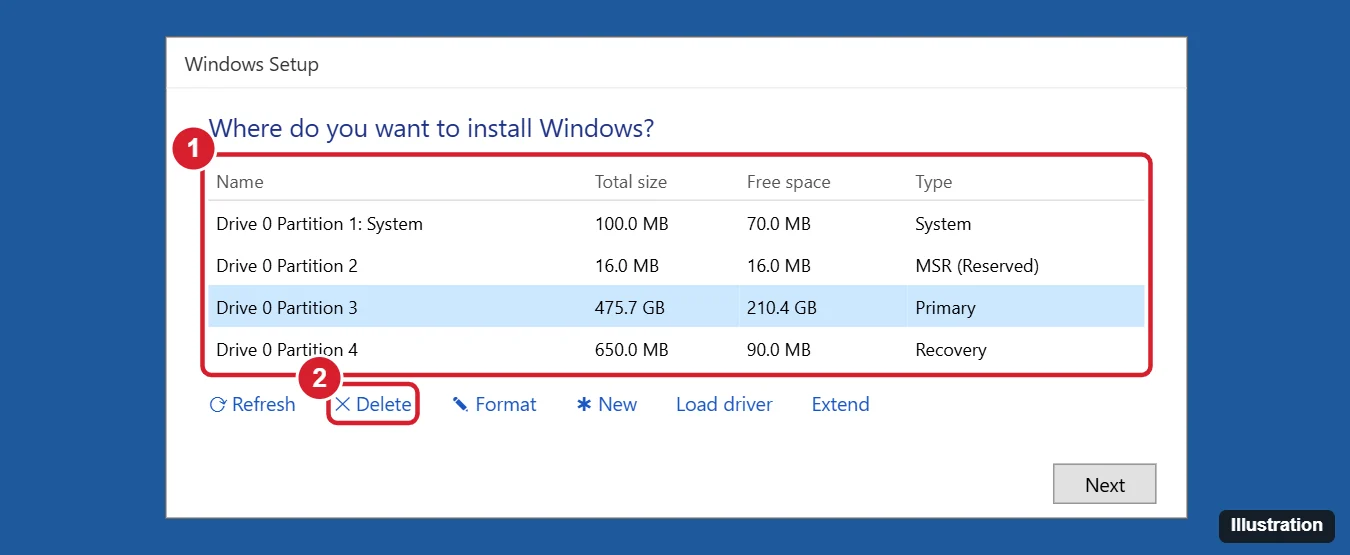
Your PC restarts a few times. Remove the USB drive if it keeps booting into Setup.
Step 4: Finish setup
- Follow the prompts to choose your region, keyboard, and network, and sign in.
- Run Windows Update until no more updates appear, including optional driver updates.
- Install drivers from your PC maker’s website, then reinstall your apps and restore your files.
An easier alternative: Reset this PC
If Windows still starts, go to Settings > Update & Security > Recovery > Reset this PC > Remove everything > Cloud download. It reinstalls Windows without a USB drive and is almost as thorough as a clean install.
Frequently asked questions
Will a clean install remove viruses?
Yes, deleting the partitions removes malware on that drive. Scan your backup files before restoring them.
Do I need to buy Windows again?
No, if the PC had an activated copy. Windows activates automatically using a digital license tied to the hardware.
How long does a clean install take?
Usually 30 minutes to an hour, plus time for updates, drivers, and apps.

Kermit Matthews is a freelance writer based in Philadelphia, Pennsylvania with more than a decade of experience writing technology guides. He has a Bachelor’s and Master’s degree in Computer Science and has spent much of his professional career in IT management.
He specializes in writing content about iPhones, Android devices, Microsoft Office, and many other popular applications and devices.