Windows 11 includes Microsoft Defender Antivirus, often still called Windows Defender, as part of the Windows Security app. It’s on by default, but it can end up switched off: after installing and removing another antivirus, after someone paused real-time protection, or because a setting or policy disabled it. This guide shows how to turn Defender on, check that it’s working, and fix it when the switches are greyed out or say “managed by your organization.”
Quick Answer
Open Start, type Windows Security, and open it. Go to Virus & threat protection > Manage settings and turn on Real-time protection, Cloud-delivered protection, and Tamper Protection. If another antivirus is installed, Defender stays in the background until you uninstall that product.
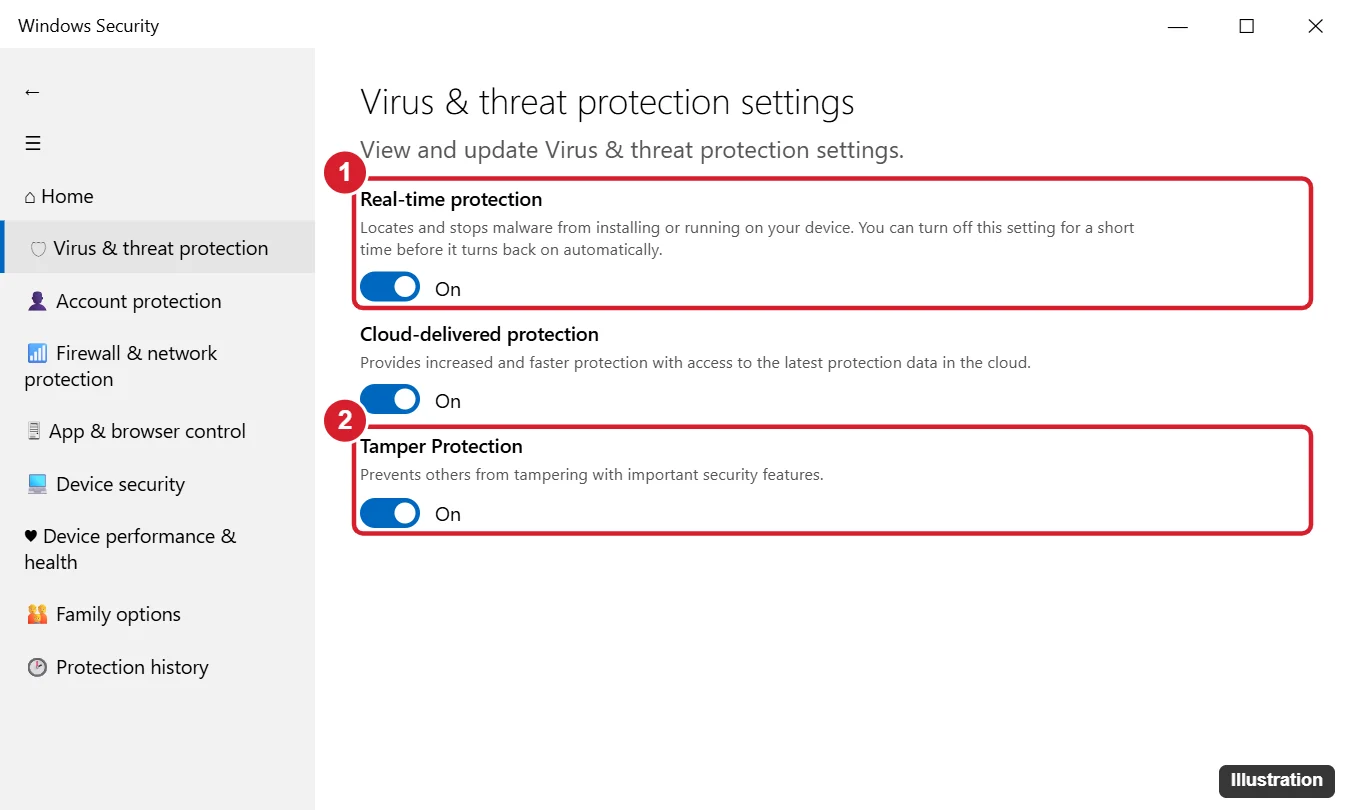
Step 1: Turn On Real-Time Protection
- Open Windows Security. You can also click the shield icon in the taskbar’s hidden icons, or go to Settings > Privacy & security > Windows Security.
- Click Virus & threat protection.
- Under Virus & threat protection settings, click Manage settings.
- Turn on Real-time protection, and click Yes on the prompt.
- Also turn on Cloud-delivered protection, Automatic sample submission, and Tamper Protection.
Step 2: Check Everything Is Green
On the Windows Security Home page, each area should show a green check. Click any yellow or red item and follow its Turn on button, especially Firewall & network protection and App & browser control.
Then click Protection updates > Check for updates and run a Quick scan.
If Another Antivirus Is Installed
| Situation | What Windows Security shows | What to do |
|---|---|---|
| Third-party antivirus active | “You’re using other antivirus providers” | Keep it, or uninstall it to switch back to Defender |
| Third-party antivirus expired | Warnings, and Defender may still be off | Uninstall the expired product and restart |
| Want both (Defender as backup) | Option for Periodic scanning | Turn it on under Microsoft Defender Antivirus options |
Uninstall third-party antivirus from Settings > Apps > Installed apps. If it doesn’t uninstall cleanly, use the vendor’s official removal tool. Defender turns on automatically after a restart.
Fix: “This setting is managed by your administrator”
A Group Policy or registry setting is keeping Defender off. On a work or school PC, contact your IT department. On a personal PC:
Windows 11 Pro, Enterprise, or Education
- Press Windows key + R, type
gpedit.msc, and press Enter. - Go to Computer Configuration > Administrative Templates > Windows Components > Microsoft Defender Antivirus.
- Open Turn off Microsoft Defender Antivirus and set it to Not Configured.
- Under Real-time Protection, make sure Turn off real-time protection is Not Configured.
- Restart the PC.
Windows 11 Home (or leftover registry settings)
- Open Registry Editor (
regedit). - Go to
HKEY_LOCAL_MACHINE\SOFTWARE\Policies\Microsoft\Windows Defender. - Delete values such as DisableAntiSpyware or DisableAntiVirus, and the Real-Time Protection subkey if present. Back up the key first with File > Export.
- Restart.
“Tweaker” or “debloat” tools often add these policies, so check whether one was used.
Check Defender’s Status with PowerShell
Run Get-MpComputerStatus in PowerShell and check that AntivirusEnabled and RealTimeProtectionEnabled both show True. AMRunningMode should say Normal (not Passive).
Troubleshooting
Windows Security won’t open or shows a blank page
Go to Settings > Apps > Installed apps > Windows Security > Advanced options > Repair (or Reset). Then run sfc /scannow in an admin Command Prompt.
Real-time protection turns itself off
Windows turns it back on after a temporary pause, which is expected. If it keeps turning off, look for malware that disables security tools: run a Microsoft Defender Offline scan from Scan options.
The Defender service won’t start
The service can’t be started manually if policies or another antivirus block it. Remove those first, then restart.
Frequently Asked Questions
Is Windows Defender free?
Yes. It’s built into Windows 11 at no extra cost.
Is Defender enough protection?
For most people, yes, when combined with Windows updates, a standard (non-admin) account for daily use, and careful downloading.
Is it the same on Windows 10?
Yes. The steps are the same, except that Windows Security is under Settings > Update & Security.
Summary
- Open Windows Security > Virus & threat protection > Manage settings.
- Turn on Real-time protection, cloud protection, and Tamper Protection.
- Uninstall other antivirus software if Defender stays passive.
- Clear Group Policy or registry settings if the switches are locked.
- Update definitions and run a quick scan.

Kermit Matthews is a freelance writer based in Philadelphia, Pennsylvania with more than a decade of experience writing technology guides. He has a Bachelor’s and Master’s degree in Computer Science and has spent much of his professional career in IT management.
He specializes in writing content about iPhones, Android devices, Microsoft Office, and many other popular applications and devices.